Forty Years with Bonsai: The Parekhs’ Artistic Journey and Their Move from Mumbai to Bengaluru
The Parekhs recount their four-decade bonsai journey, beginning with exposure at the 1970 Osaka Expo, mentorship by Naka and Kato Sensei, founding of the Bonsai Study Group, and contributions to bonsai education and publishing in India.
January 1, 2026
By Nikunj ParekhPublished in: BCI Bonsai & Stone Appreciation Magazine 2026 Q1
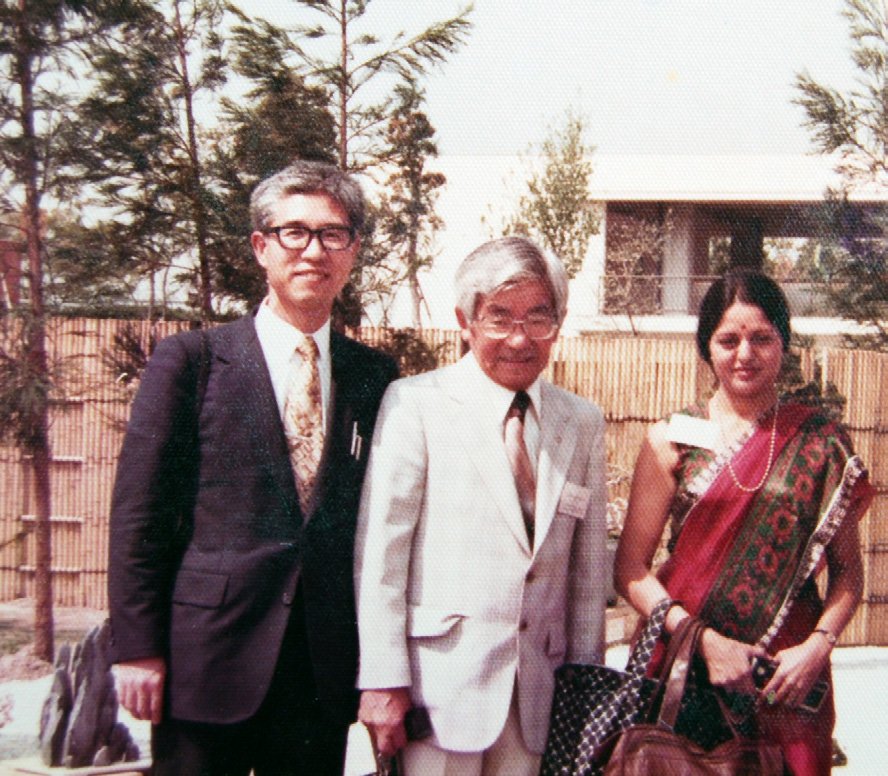
It all started with the miniature trees displayed at the International Expo 1970 in Osaka. After patiently waiting in a long queue with thousands of other visitors, Nikunj returned to India and showed Jyoti the photographs he had taken of the eye-catching bonsai. At that time, she was just beginning to pursue bonsai-making herself.
Jyoti’s next opportunity came when she was asked to lead four children from a Mumbai school to the Children’s International Summer Village. At the end of the trip, the host family asked if she would like to see anything else. She said “yes,” and they took her to visit Mansei-en at Omiya-Koen in Saitama—the world-famous garden of Saburo Kato Sensei.
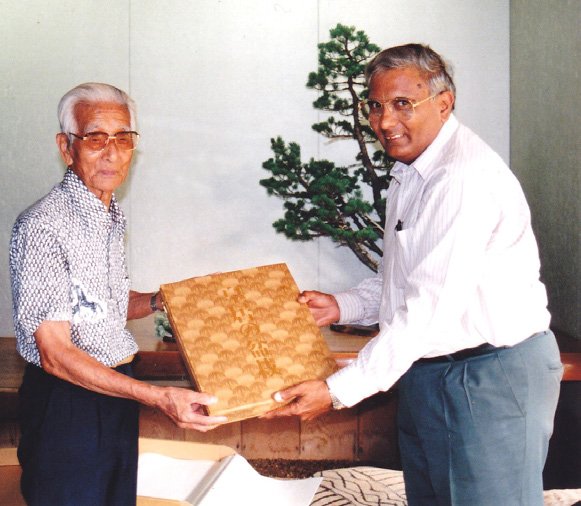
Jyoti, who had just authored her first bonsai book, Tropical Bonsai, gifted a copy to the man considered the father figure of world bonsai. She was later invited to attend the World Bonsai Convention in Osaka in 1980.
In that same year, we had yet another opportune visit to the U.S. when we travelled to Boston. A cousin, who knew of our interest in bonsai, took us to a night workshop for bonsai growers led by the renowned John Yoshio Naka.
Immediately, we asked Naka Sensei if he would be willing to come to Mumbai to conduct a four-day workshop. He agreed to come in 1981, and we felt truly blessed to be taught by both of our gurus.
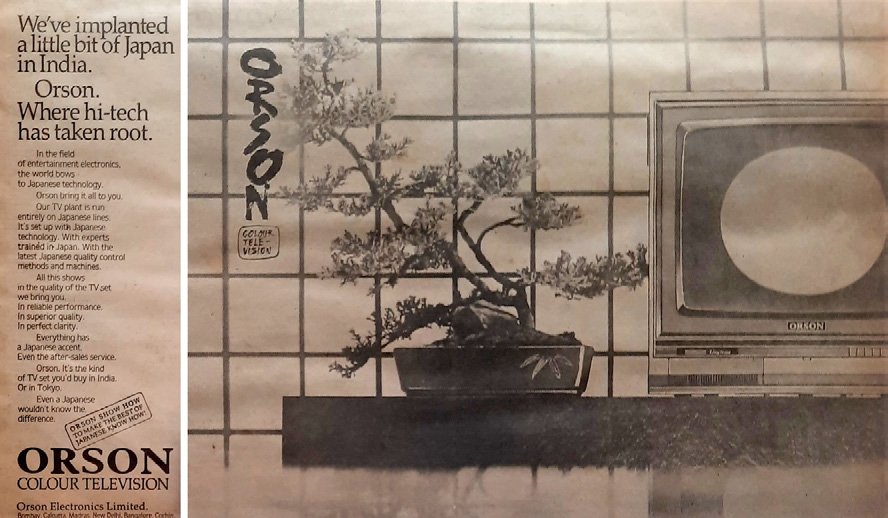
After watching his workshop, Nikunj tried his hand at creating a bonsai from a Juniperus prostrata. The next day, he showed his novice creation to Naka Sensei, who frankly said that the tree lacked depth. He then simply moved a branch that was wired slightly to the back, and the tree was transformed into a beautiful bonsai. This juniper was later featured in a newspaper advertisement for the ORSON TV brand and also showcased on advertisement hoardings across India.
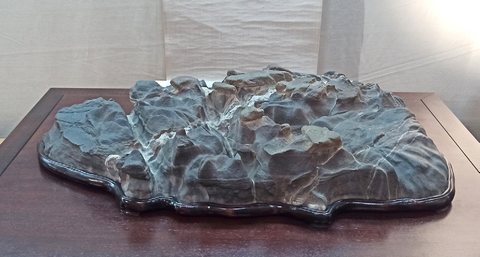
Following this, numerous bonsai experts from around the world visited to share their knowledge. Sharing expertise on bonsai, saikei, and penjing displayed in suiban became the lifelong mission of the Bonsai Study Group of The Indo-Japanese Association. Established in 1979, the group has nearly 23 affiliated chapters throughout India. In addition to hosting experts, the group has also been publishing books on the subject and editing Nichin Bonsai, a quarterly magazine, since 1985.
Working with Juniper Bonsai
Juniper species are highly versatile and can be used to create nearly all bonsai styles. However, proper care is crucial for maintaining their health. Use clean, sharp pruning scissors, and trim regularly to prevent the canopy from becoming dense and blocking sunlight. When the lower branches do not receive enough light, they become dull and lanky. Regular trimming also reduces the chances of fungus and disease spreading among your junipers.
Pruning Juniper Bonsai
To maintain a juniper bonsai’s health and shape, prune it correctly:
Always remove dead branches from the tip down to the base.Dieback at the bottom is often caused by an overgrown apex. To prevent this, leave new green shoots closer to the trunk.Be selective when trimming. Cut back individual new shoots while keeping in mind the desired direction for next spring’s growth.Many junipers grow laterally. You may allow a few vertical branches to grow upward depending on the design.
Juniper Varieties
Juniperus procumbens (“Garden Juniper”) is a low-growing evergreen conifer. The “nana” cultivar is compact and spreads in all directions. In India, junipers thrive in the Hooghly River Delta region near Kolkata. Slow-release organic fertilizers like vermicompost, leaf mould, or compost can be added during the dry season to improve soil moisture and nutrition. An organic fertilizer with a 19:19:19 NPK ratio is useful when nutrients are depleted. Powdered goat or sheep manure can also be applied to achieve lush green foliage.
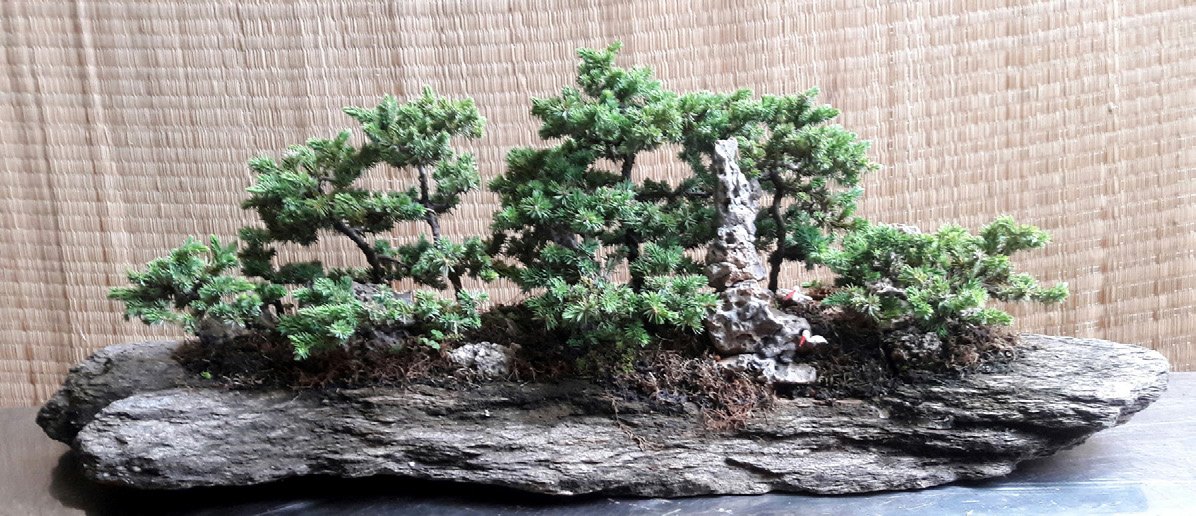
Repot once a year, either at the end of the rainy season or in early February to March during spring. A recommended soil mix includes two parts sun-dried garden soil, two parts sun-dried cow manure (without lumps), and two parts broken brick pieces for aeration and water retention.
Juniperus chinensis (Chinese Juniper) is popular in Japan, China, and the Himalayan regions. It typically grows to 15 meters tall in the ground. It prefers moist, well-draining soil until established.
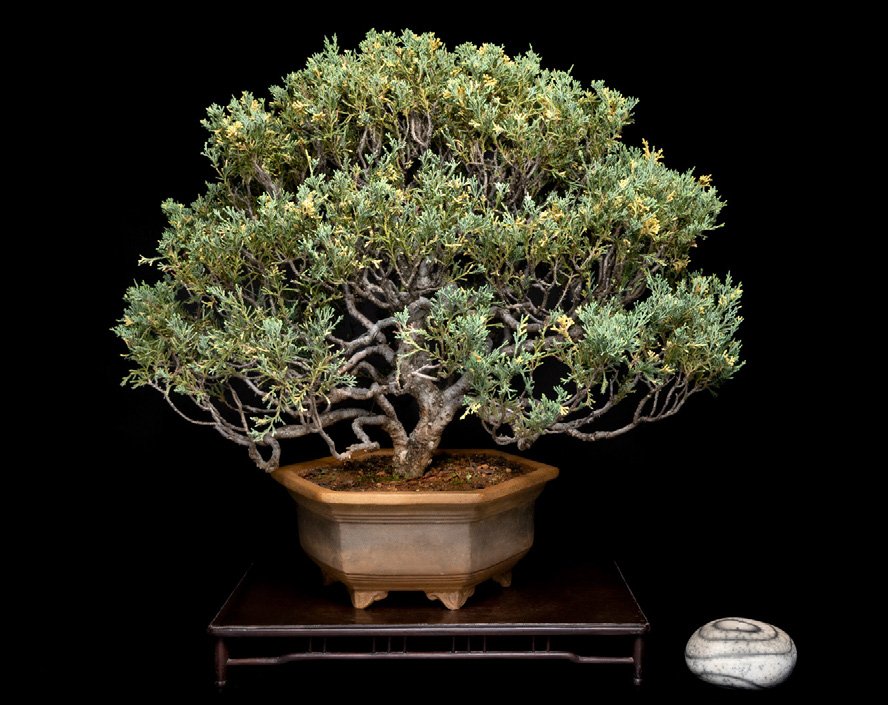
To manage an overgrown juniper, trim side branches—which often take up space—by cutting a quarter of their length. Use sharp scissors on top branches, as many grow laterally. To encourage rapid vertical growth, cut branches about 2–3 cm outside any dead areas. Avoid aggressive trimming of apical branches.
Remove dead or damaged branches, or shape them to create a “lightning strike” effect. Do not trim new growth during summer, as the soft green shoots are delicate.
Shifting from humid, sea-facing Mumbai to cooler, less humid Bengaluru posed a challenge for our trees.
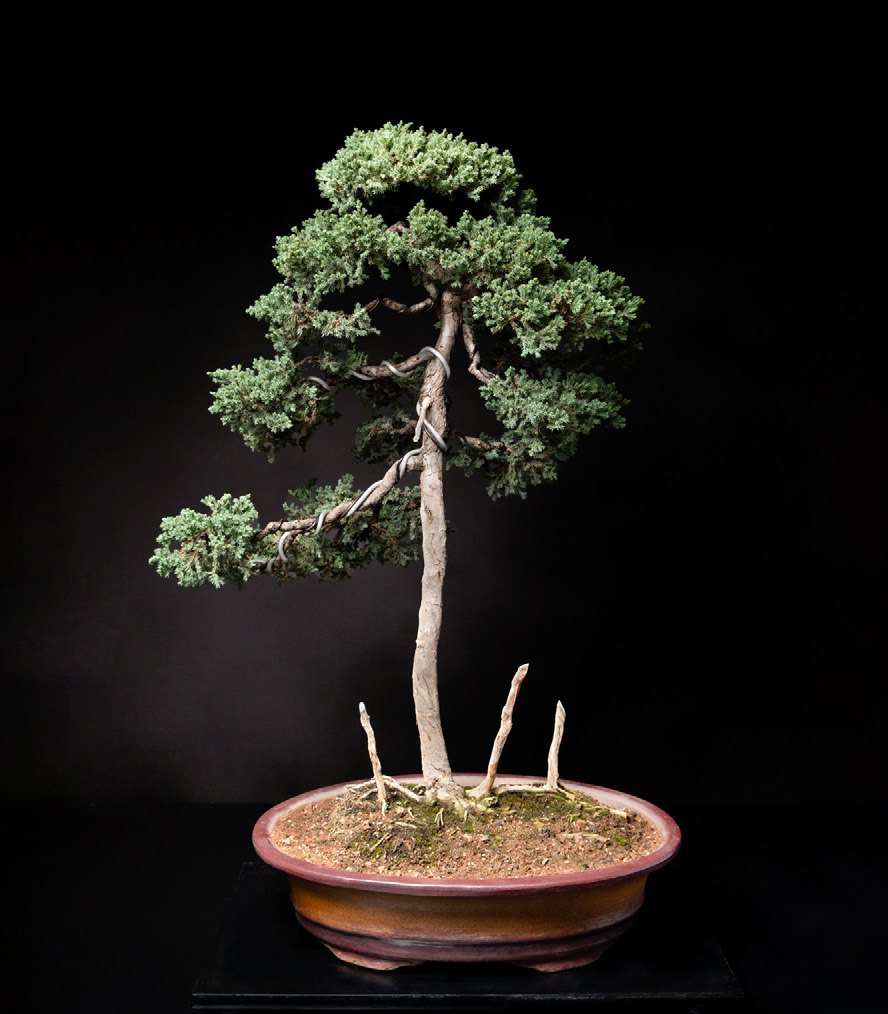
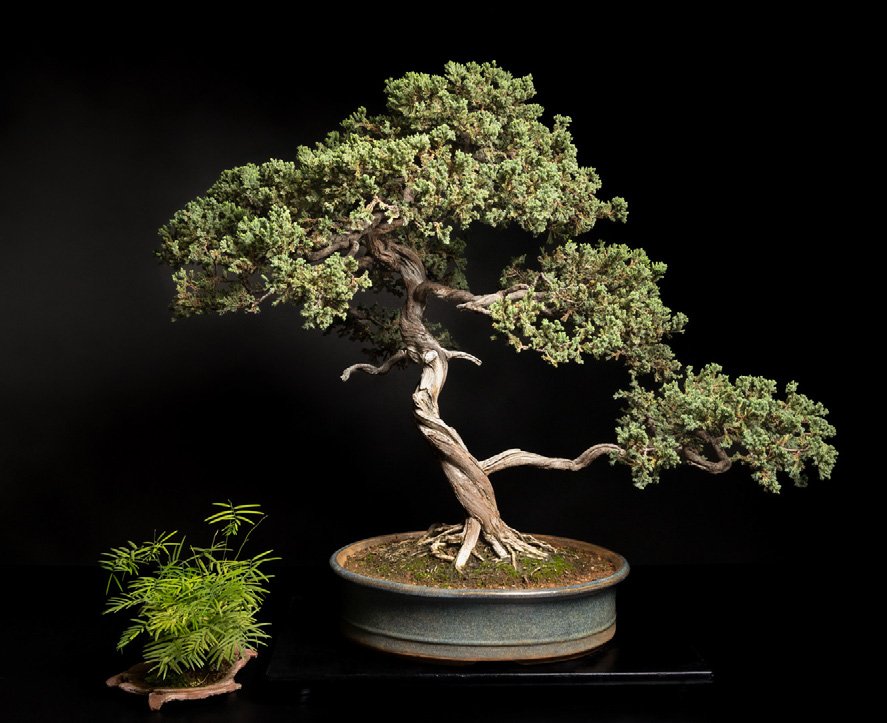
Drooping branches can be wired toward the sunlight. Check the wire periodically to avoid it biting into the bark. With experience, artists may intentionally allow minor wire marks to develop a shari effect.
Juniperus rigida (Needle or Temple Juniper) is native to Japan, Korea, and China. It retains its needles year-round and can be propagated from tender cuttings. It has a deep taproot and fibrous surface roots, adapting well to many soils. Full sun or light shade is ideal.
Water in the morning so the needles dry during the day. Evening watering can cause fungal infections. Brown needles may indicate disease, insects, under-watering, or, if extensive, the death of the tree.
Juniperus blaauw has greenish-blue needles and can be styled with careful bending and wiring. Jin and shari can also be created on this variety.
Disease indicators include an excessive number of dead branches, discolored foliage, and cracked or damaged bark. Moisture stress can cause browning, as can high salt levels in water or air. Avoid over-spraying fertilizers if the plant looks dull.
To check if a dormant juniper is alive, test whether the branches are pliable or scratch the bark for green tissue underneath.
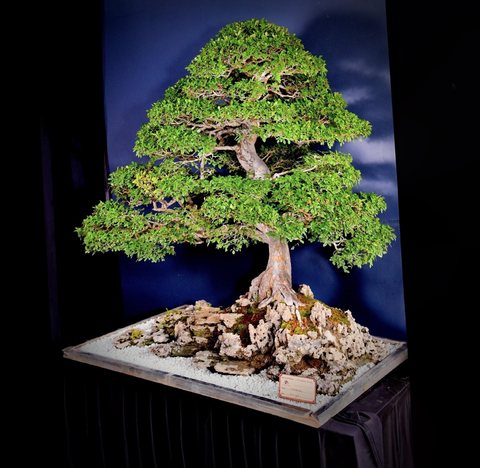
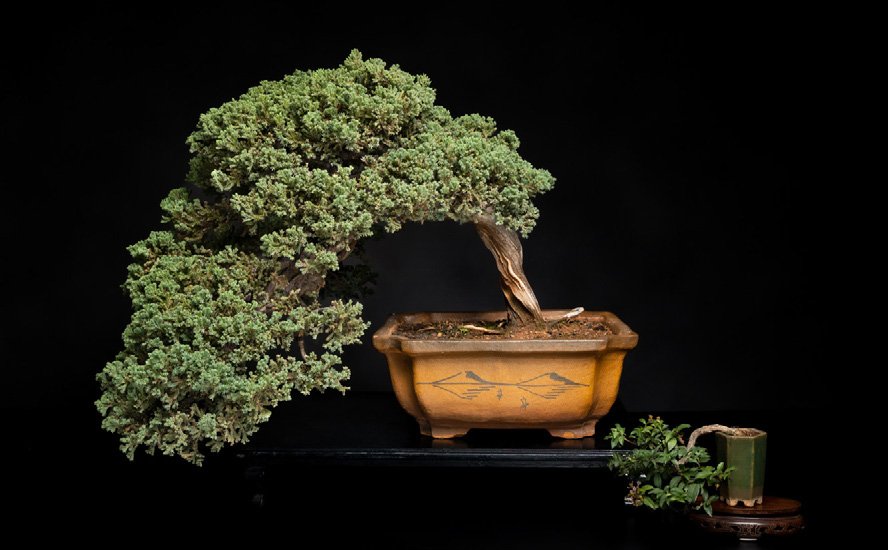
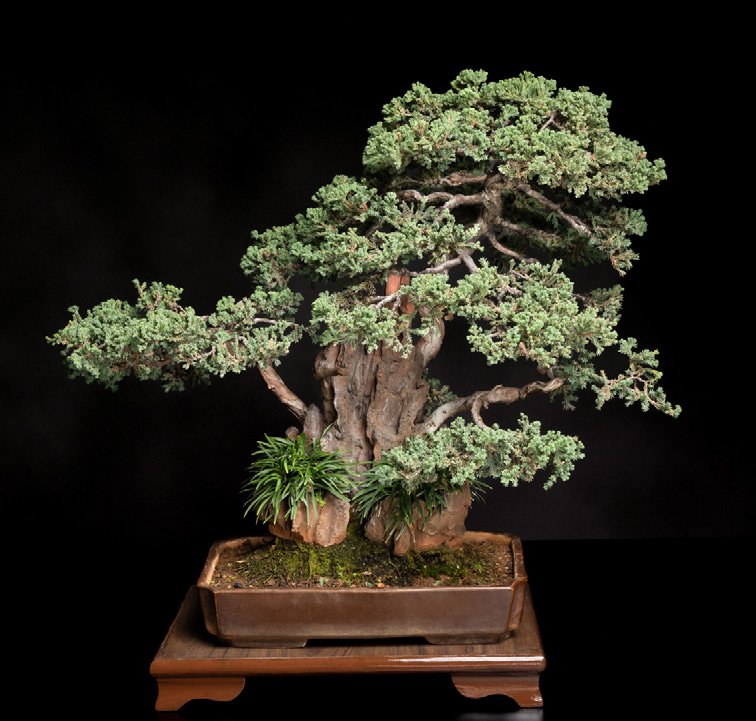
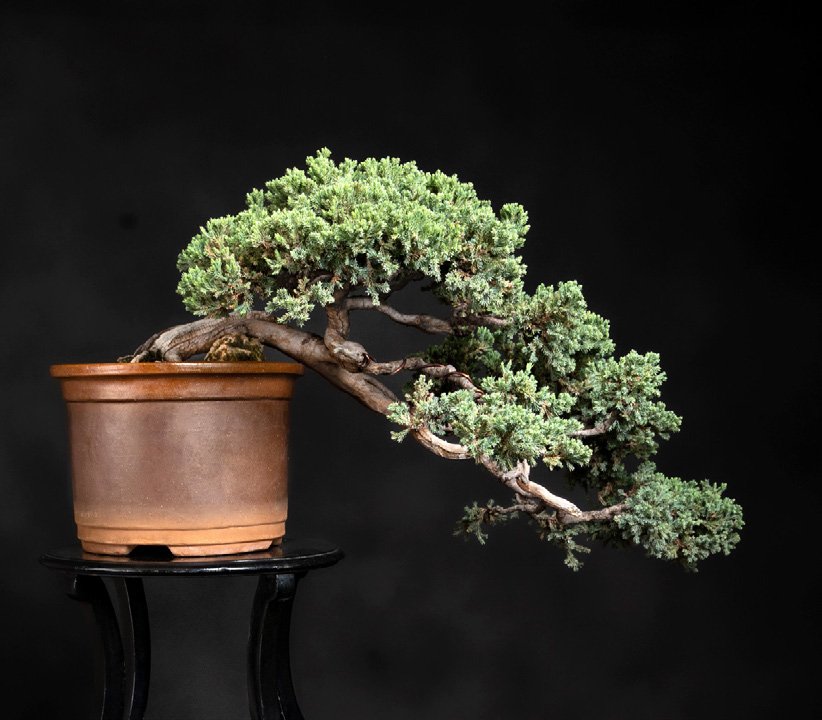
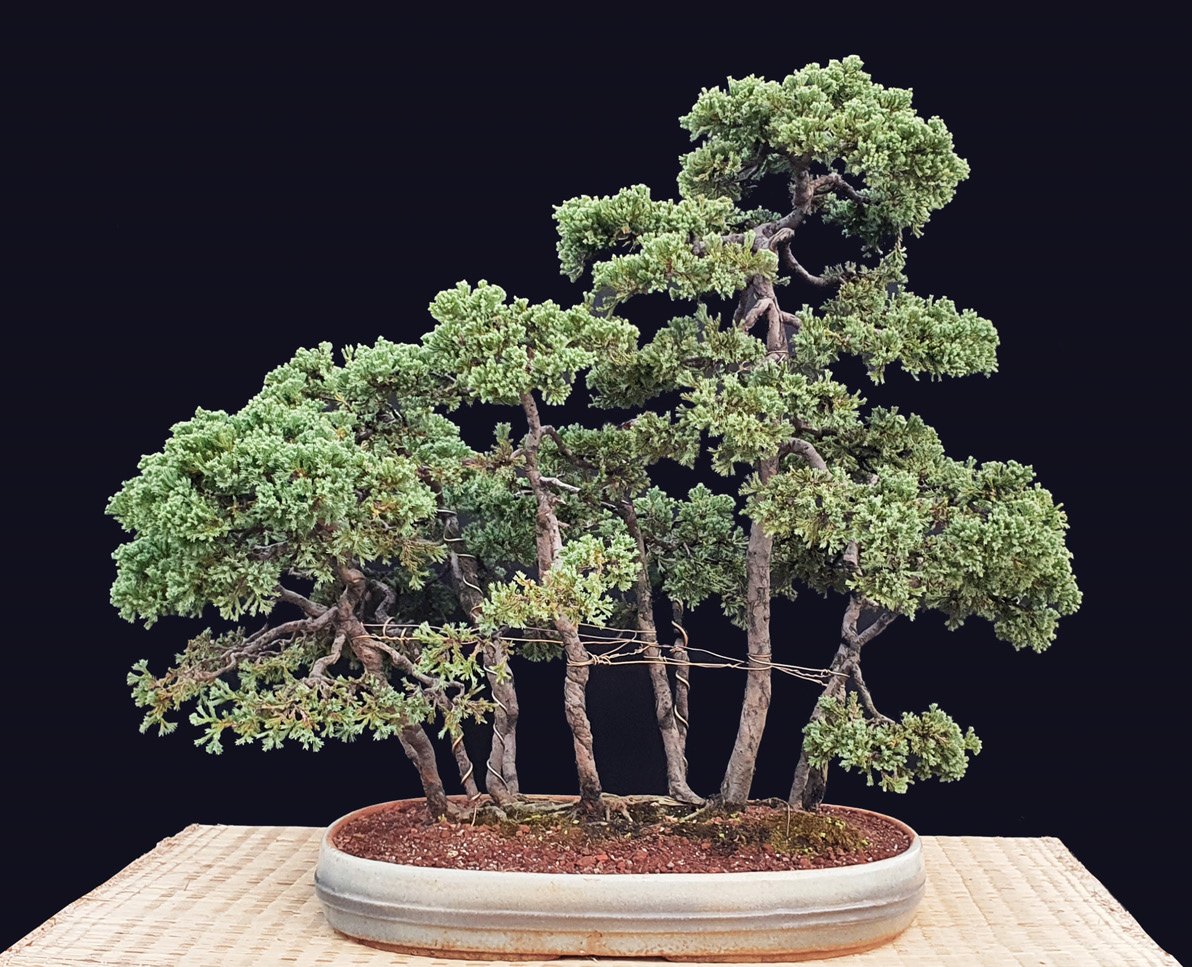
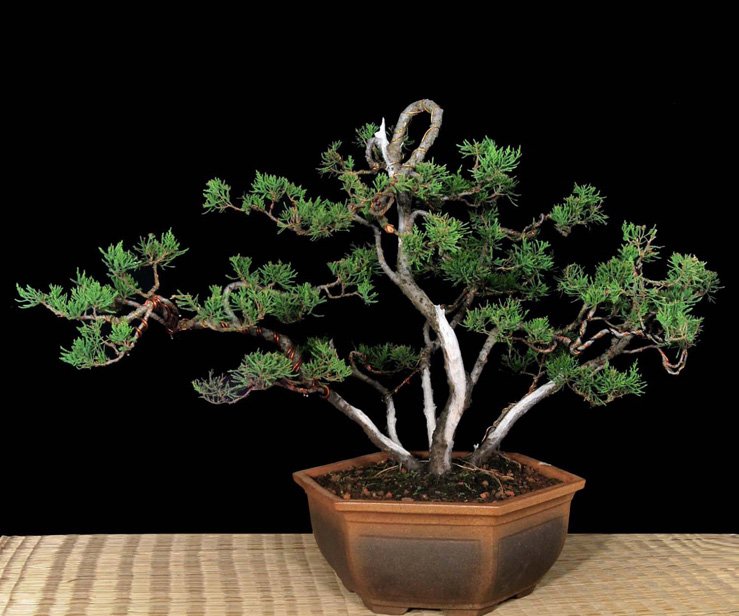
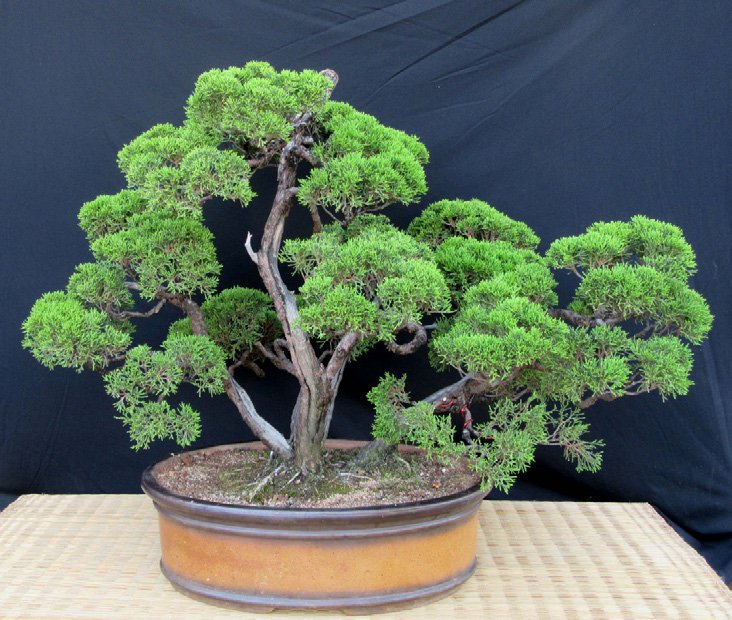
Just as people change over time, so do bonsai. It is often necessary to restyle and redesign a tree as it ages. We have included photographs of some of our junipers styled since 1980, focusing on depth, branch flow, root spread, and trunk line. Techniques such as jin and shari help highlight the tree’s age and character.
A lime sulfur solution is used to preserve deadwood as part of the tree’s visual history.
Cultivating a Passion
From 1980 onwards, we nurtured nearly 1,800 bonsai and trained nursery plants at our home in Mumbai and at our farm. We travelled extensively to Japan, China, Sri Lanka, the U.S.A., and across India, participating in conventions and demonstrations. Our bonsai group members have become an extended family. As an active board member of Bonsai Clubs International (BCI) and a founding member of the World Bonsai Friendship Federation, we feel blessed with the guidance of Naka Sensei and Katoh Sensei and the friendships we have formed worldwide.
A Manageable Collection for a New Stage of Life
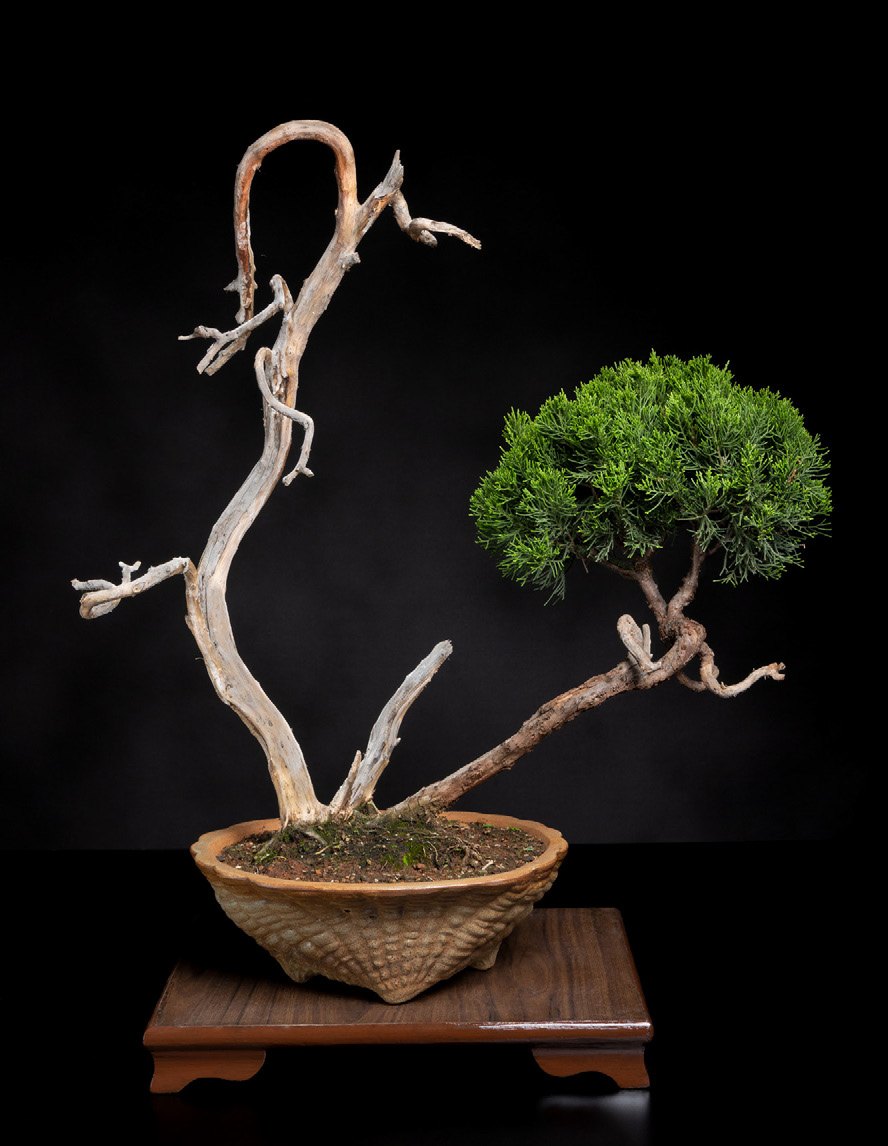
A time came when we decided to move from Mumbai to Bengaluru to be closer to our only daughter and her family. We reduced our collection of 1,800 bonsai to just 350 for the move. Shifting from humid, sea-facing Mumbai to cooler, less humid Bengaluru posed a challenge for our trees. To create temporary humidity, we placed earthen containers filled with water around the bonsai to help them acclimatize. Even so, the change in climate, water quality, and location had an adverse effect, and we lost some trees. Some juniper bonsai had to be redesigned, but after nearly two years, they are now thriving.
The rest of our creations were given to leading industrial houses and bonsai lovers.
Now in our 80s, we are adjusting to our new environment and have begun sharing our knowledge of bonsai and landscape gardening with the community of 800 villas in our residential complex. Our new helpers have also begun learning with great enthusiasm. We continue to learn, adjust, and maintain a manageable collection in the space available. For us, age is no barrier to learning or sharing knowledge. We have kept a select few ficus, bougainvillea, and other fruiting, tropical, and subtropical bonsai, as well as saikei and suiban penjing, to care for with complete satisfaction.