
School-enterprise collaboration empowers intangible cultural heritage inheritance: Baowen Garden and Guangdong Vocational College of Science and Trade deepen industry-education integration cooperation
By Guangzhou Baowen Gardens · May 28, 2026
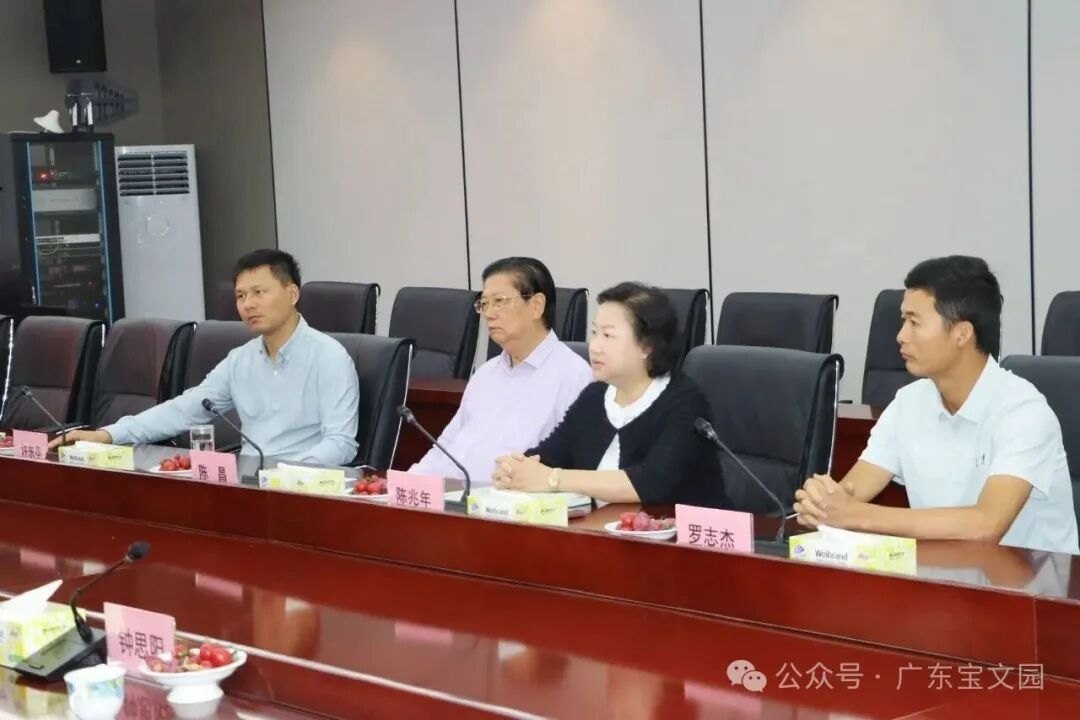
On May 9, 2026, Du Fangmin, Party Secretary of Guangdong Vocational College of Science and Trade, led a delegation to Baowen Bonsai Garden for research and exchange. Chen Chang, President of Bonsai Clubs International (BCI) and Chairman of BCI China, and owner of Baowen Garden, warmly received them with his team. The two sides engaged in in-depth exchanges on three major directions—industry-education integration, scientific research innovation, and cultural dissemination—and reached multiple cooperation consensuses.
At the symposium, Chen Chang welcomed Secretary Du Fangmin and his delegation, and reviewed the cooperation achievements since the joint establishment of the "Baowen Bonsai Craftsman Industry College." The school-enterprise team conducted in-depth discussions on three core topics to accelerate the implementation of cooperation projects.
1. Jointly building an industry-education integration base, creating a new highland for talent cultivation
Both sides reached an agreement on the construction details of the bonsai industry-education integration practice base at the School of Landscape Architecture of Guangdong Vocational College of Science and Trade. Chairman Chen Chang stated that Baowen Garden will leverage industry resources and its master team to deeply participate in practical training course design, master-led teaching of intangible cultural heritage, and industry skill certification. Together with the college, they will build an integrated platform of "classroom teaching + practical training + industry connection" to cultivate compound talents with both theoretical knowledge and practical skills for the Lingnan bonsai industry, addressing the industry's talent gap. The two sides also communicated on details such as practical training scenario planning and the implementation of a dual-tutor system between the college and enterprise, clarifying that the base will become an important vehicle for the mutual empowerment of bonsai skill inheritance and college talent cultivation.
2. Collaborating on a scientific research platform to explore new paths for digital-intelligent bonsai
The school-enterprise team conducted detailed discussions on the application work for the "Lingnan Bonsai Digital-Intelligent Engineering Center." Lin Tao from Guangdong Vocational College of Science and Trade introduced the research foundation of both sides in areas such as landscape architecture digitization, intelligent maintenance technology, bonsai germplasm resource conservation, and digital preservation of traditional skills. Both sides clarified that, using the digital-intelligent engineering center as a carrier, they will explore innovative directions such as AI-assisted styling design, digital twin bonsai maintenance, and VR teaching of intangible cultural heritage skills, promoting the deep integration of Lingnan bonsai intangible cultural heritage skills with modern digital technology, creating an industry benchmark for industry-university-research integration, and providing a demonstration for the digital transformation of the bonsai industry.
3. Cultivating young cultural communicators to expand the influence of Lingnan bonsai
Both sides finalized the joint establishment of the Lingnan Bonsai Innovation Center, with the main tasks of exploring youth industry talent cultivation and assisting in the dissemination of intangible cultural heritage. Baowen Garden will provide high-quality bonsai collections and industry expert support, while the college will leverage its strengths in new media teaching and student teams. Focusing on Lingnan bonsai landscaping techniques, cultural connotations, and industry development, through forms such as online interaction, appreciation of collections, and master interviews, they aim to break down barriers in cultural dissemination, allowing more young people to experience the charm of Lingnan bonsai, enhancing the dissemination power and influence of intangible cultural heritage, and helping Lingnan bonsai culture reach the public, the nation, and the international stage.
After the symposium, Chairman Chen Chang accompanied Secretary Du Fangmin and his delegation to visit the high-quality bonsai collection area and bonsai cultivation base of Baowen Garden, introducing the development history of Baowen Garden, the inheritance context of Lingnan bonsai, as well as achievements in industrial innovation and international cultural exchange.
Secretary Du Fangmin highly recognized Baowen Garden's commitment to preserving intangible cultural heritage and promoting industry development. Combining the college's advantages in teaching and scientific research, he provided guidance on talent team building, digital transformation, and cultural brand building for Baowen Garden. He stated that the college will continue to deepen school-enterprise cooperation, using the industry college, practice base, and scientific research platform as links to connect the entire chain of talent cultivation, technological innovation, and industrial development, jointly promoting the inheritance of Lingnan bonsai skills and the high-quality development of the industry.
Yang Yunying, Dean of the School of Landscape Architecture at Guangdong Vocational College of Science and Trade, Professor Luo Zerong, Lin Tao, leader of the Landscape Architecture Design program, and Zhong Siyang, Vice Dean of the Bonsai Modern Industry College, participated in the research. Chen Zhaonian, Vice Chairwoman of the Guangdong Women's Federation and Vice Chairwoman of BCI China, Xu Dongting, Secretary-General of BCI China, and Luo Zhijie, Deputy Secretary-General of BCI China, accompanied the reception.
This exchange further consolidated the foundation of cooperation between the two parties and clarified the direction for advancing industry-education integration projects. In the future, Baowen Garden will stay true to its original aspiration of preserving Lingnan bonsai culture, deepen the school-enterprise collaborative education model, and join hands with Guangdong Vocational College of Science and Trade to create a model for intangible cultural heritage inheritance and industry-education integration, allowing Lingnan bonsai, an outstanding traditional Chinese culture, to radiate new vitality in the new era.