The Trophy Demonstrations
Demonstrations by Mauro Stemberger (Italy) on a large Pinus sylvestris yamadori and Minoru Akiyama (Japan) on a Taxus cuspidata, detailing styling decisions, techniques, and long-term plans.
By Christian Vos · April 1, 2020
Diterbitkan di: BCI Bonsai & Stone Appreciation Magazine 2020 Q2
Saturday afternoon
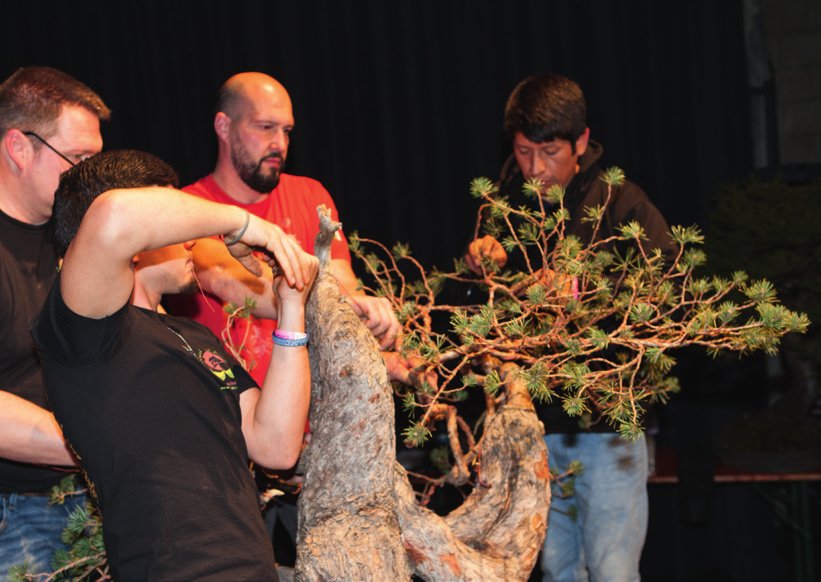
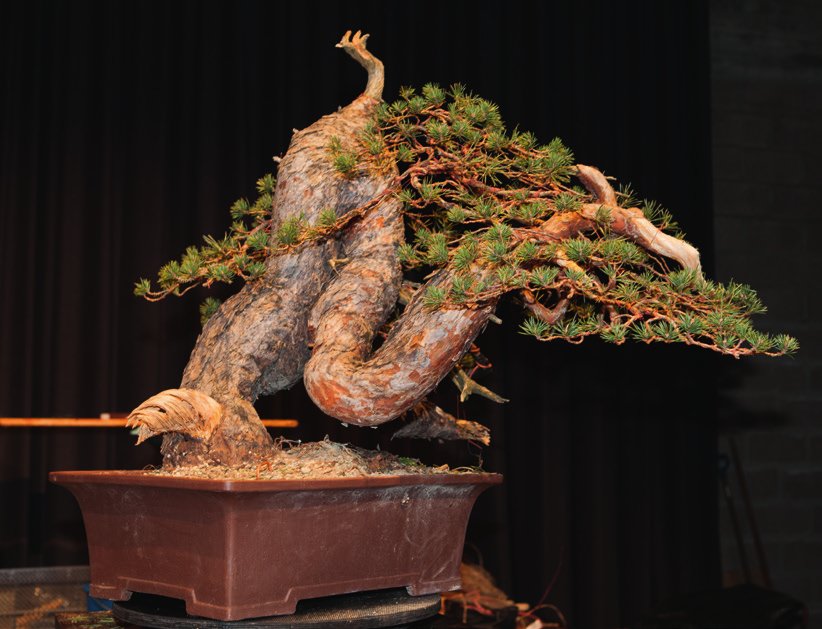
Mauro Stemberger (Italy) worked on a Pinus sylvestris yamadori collected in the Alps in Italy (with authorization, of course) and was already in a pot for 5 years. It’s a huge tree, the trunk is 40 cm and weighs around 100 kilo. It is growing well, developing new foliage every year, ready to style. The total length of the trunk from base to top is 5.5 meters (yes, we checked it), winding 180 degrees with much movement.
It took Mauro 45 minutes to decide for the front and the inclination. The assistant started to remove the old needles, and Mauro decided to shorten the trunk by 2 meters. There was still enough foliage to keep the tree healthy. The first part of the demo is to make the tree more compact.
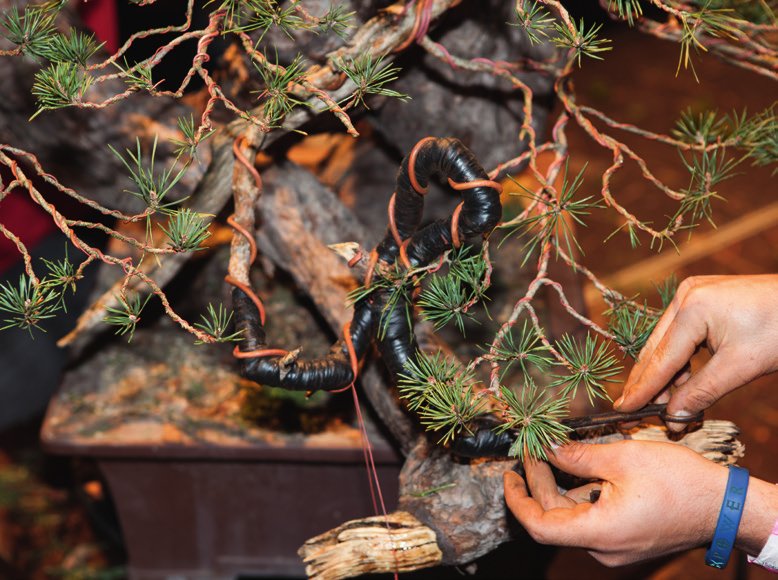
Making it smaller involved heavy bending after the necessary raffia, wiring, and guy wires to bend the trunk. Then the main branches are bent in the right position by tie wires only.
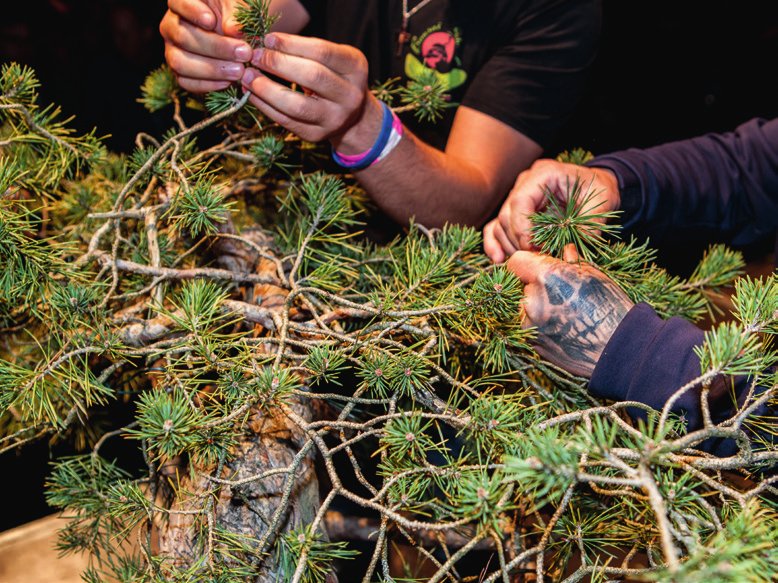
Now follows the classical wiring and positioning of the smaller branches—not so small in this «monster bonsai»
Mauro explains that it will still take five years more to make a finished bonsai out of this project. He will do it step by step: secondary styling, maybe another front side will be chosen, no Shari or Saba Miki will be done. The actual pot is a good one for further training. Of course, a definitive Pot will be selected afterward. Now the tree is healthy, and Mauro wants to keep it that way for excellent results at the end.
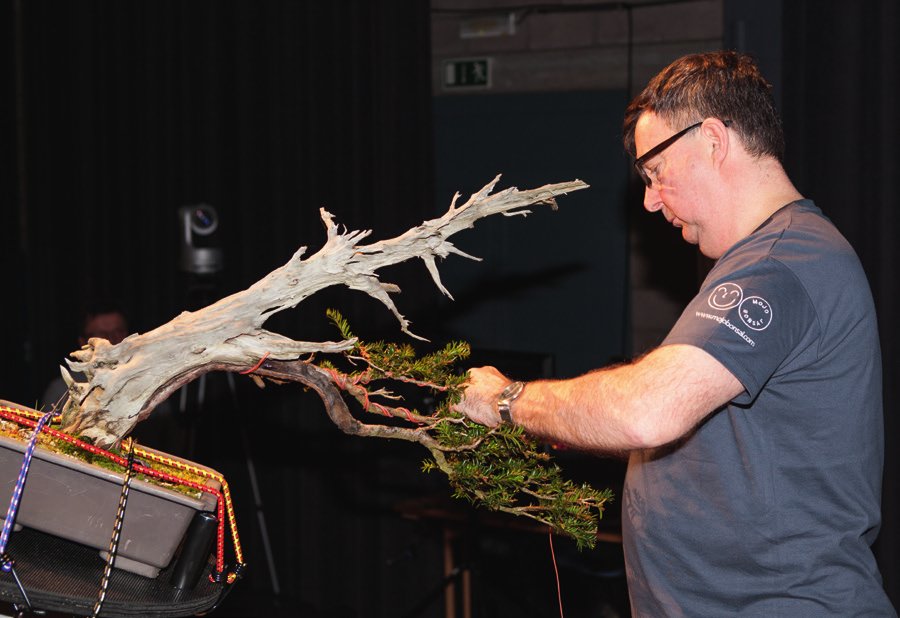
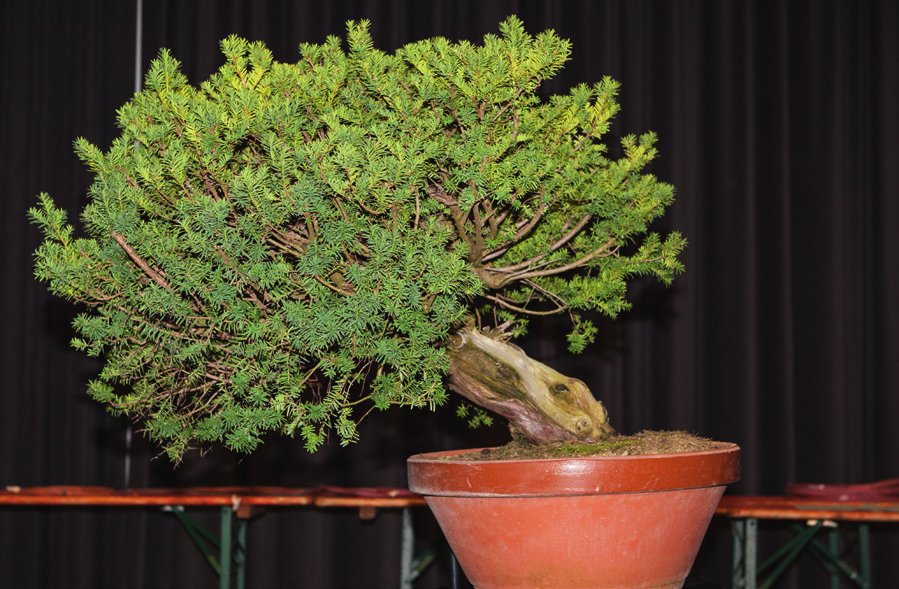
Minoru Akiyama (Japan) worked on Taxus cuspidata imported years ago from Japan. This tree has been styled before but not maintained. It has a heavy trunk, with a large Shari merging into Saba Miki.
On the upper side is a cluster of branches, deadwood, and the trunk at this point has an inverse taper with many new branches that are now too thick to be bent. The branches are too long with the new foliage at the tips. Not an easy job. Minoru takes his time and works systematically. His focus is on the trunk; therefore, he selects the front side to emphasize the shari, modifying the angle slightly using a wedge.
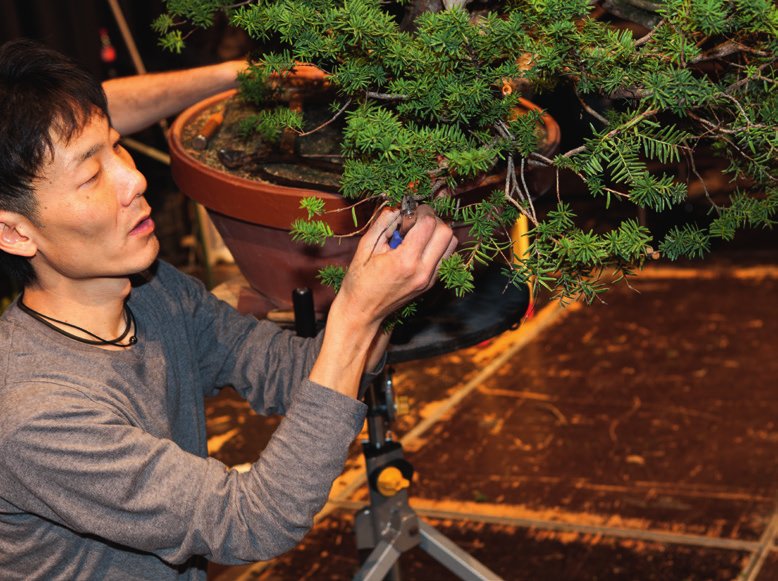
Now the massive upper part is cleaned, removing deadwood and branches. The left side has the main branch, the right side is the top. The next step is to select the remaining branches. Half of the heavy ones are removed. More light is coming inside the tree, and this allows new foliage to grow.
Using copper wire of 5 millimeter and guy wires to bring the branches down and shorten too long branches results in inner and more compact foliage. Smaller branches are left as they are. These are something to style after two years to keep the tree in good health.
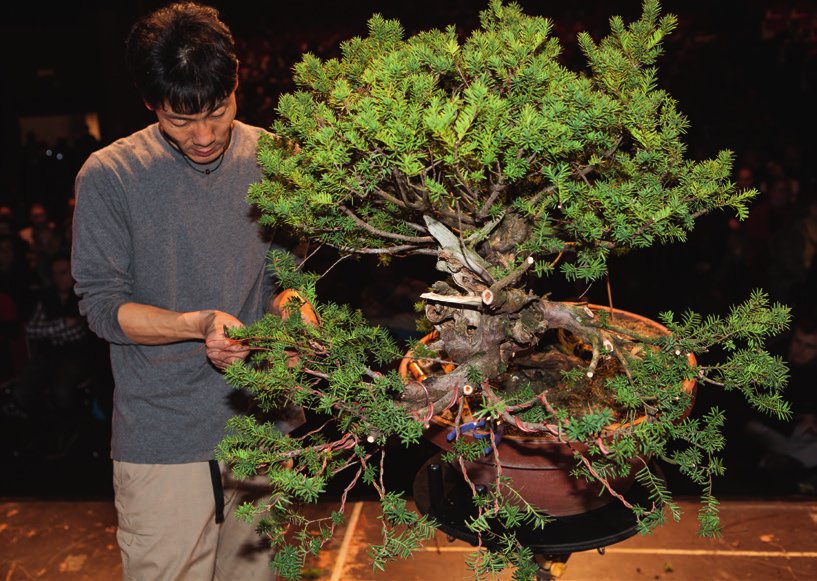
The Sashi-Eda or main branch is bent upwards to make a new apex. Maybe next year is the right moment to clean and finalize the deadwood. Repotting in a bonsai pot can be done at one or two points given Minoru does not know the condition of the roots.
Taxus generally grows well, and therefore it is essential to select and wire the correct new branches. This Taxus also needs some time to be finalized, as always in bonsai keeping the tree healthy is most important. The result shows a bright future for this project.
We also thank Peter Warren for his assistance and professional translation of Japanese into English.
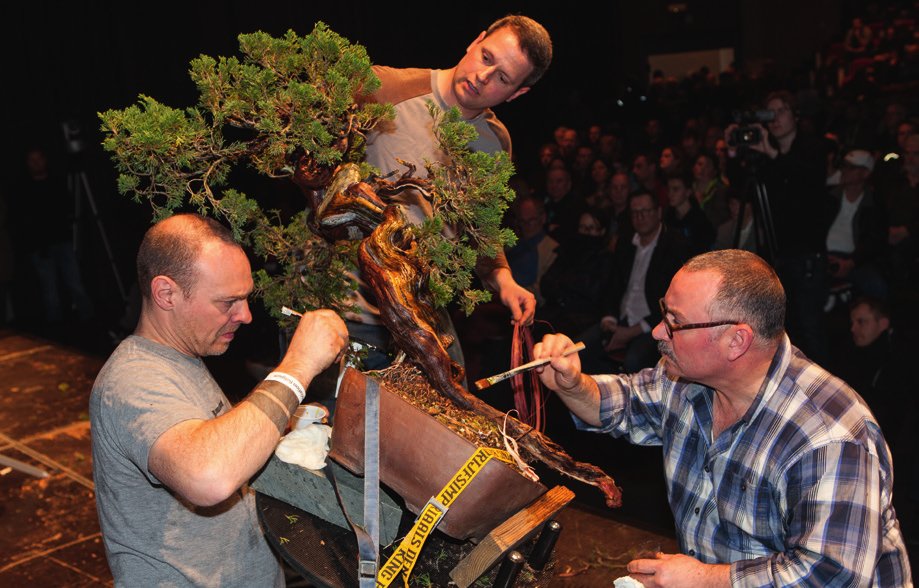
Ryan Neil (USA) and his team work on a Juniperus sabina, a Yamadori from Spain. This Sabina is in its pot for four-to-five years and is in excellent health. Sabinas are appreciated for their movement and natural deadwood. But styling is limited by the fact that the movement of the trunk and the deadwood can seldom be modified. Ryan selects the best front and inclination to emphasize the deadwood. He decides for an inclination of nearly 60 degrees. The shari at the base of the trunk merges into a Jin coming over the edge of the pot. The heavy Jin that was a second trunk previously is now perfectly visible. Selecting the best front, the perfect inclination and emphasizing the Jin was, as Ryan explains, the most important part of the demo. Not in terms of time but of aesthetics. The rest is applying technique, the traditional part of the job, but of course important too. Because of the modification of the angle, he used a branch in the back to make the new apex, but the two trunks are not in the right position.
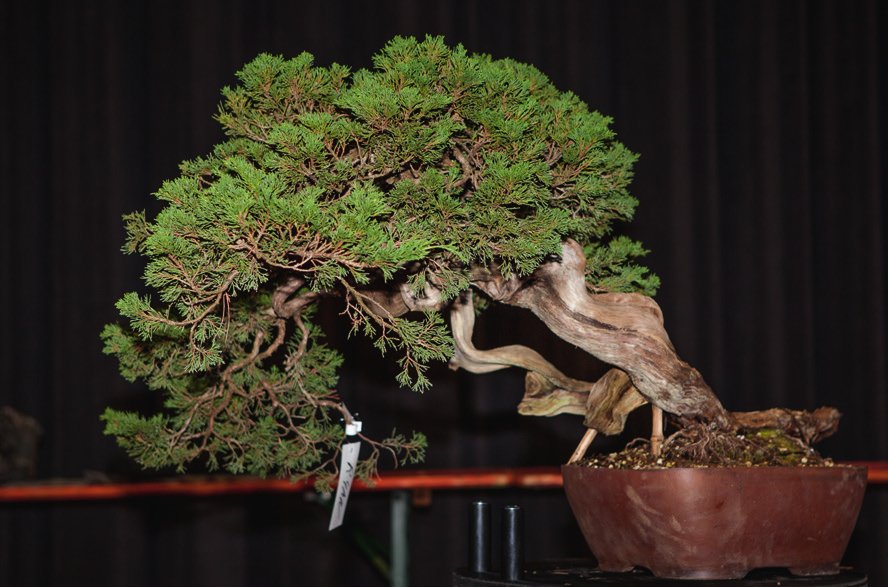
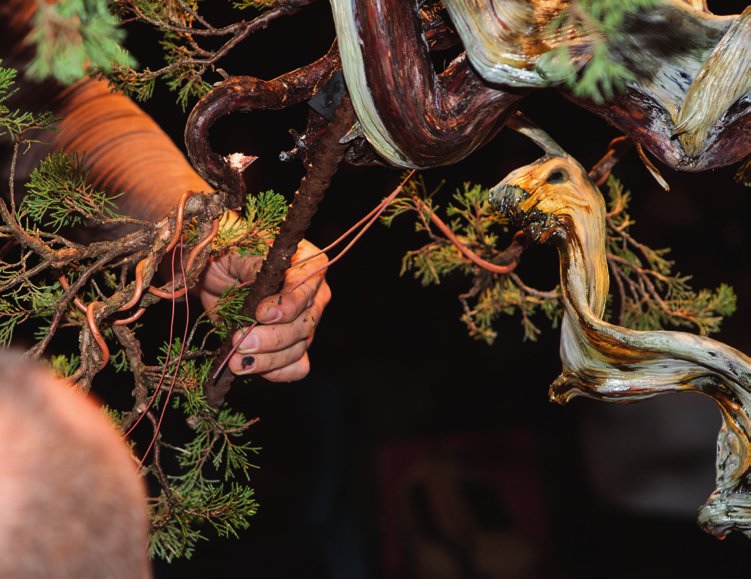
To modify their position by wiring is not a solution; the trunks are too thick. To avoid damage, Ryan applies guy wires. An iron bar is needed to attach the guy wires. With much care, trunks are little by little brought in an adequate position. The deadwood and living lines are cleaned, and Jin product is applied to highlight the deadwood. During the rest of the styling, the Jin product dries to show the beautiful deadwood, which is an essential part of the Sabina. The main branches are in place; the wood is cleaned, time to wire in detail each branch. Spreading the foliage to allow the light to develop the new foliage is necessary for Juniperus. The result is a nearly finished bonsai. As a future pot, Ryan recommends a symmetrical pot, maybe in lotus shape. Great Job.
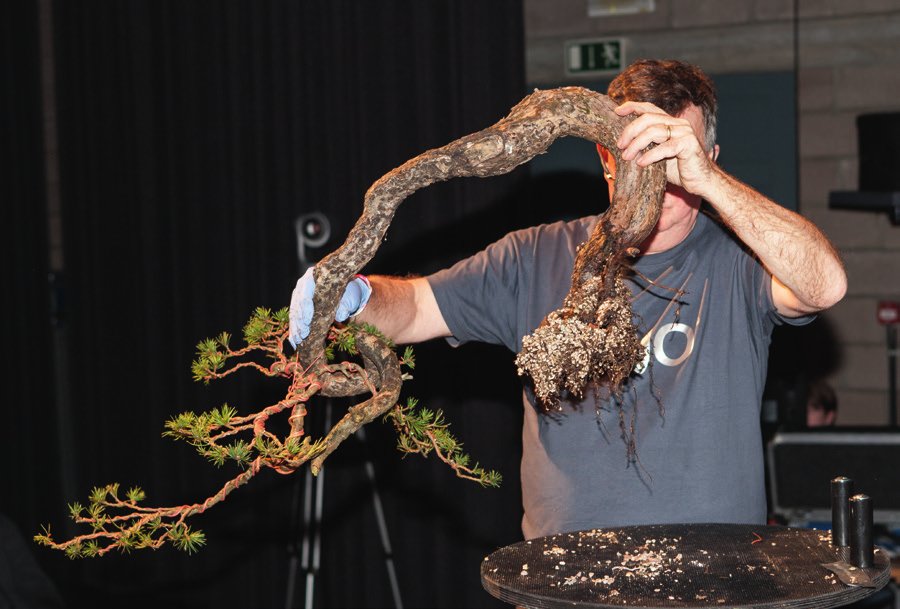
Tony Tickle (UK) works on a yamadori Pinus sylvestris. This Sylvestris has a quite long trunk with much movement and not many branches. The three first branches were cut off at the first potting. In fact, the material could be used to make a bunjin out of it, but in the end, it’s not Tony’s intention. Given the bend at the base, the best option is to create a Kangai, but with bunjin character. The tree has not much foliage, wiring and spreading the small branches will result in extra foliage.
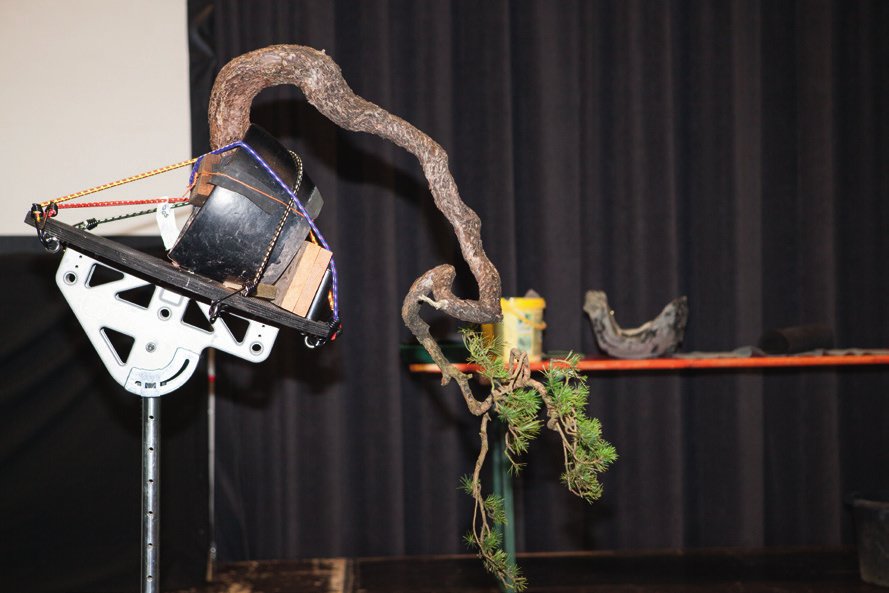
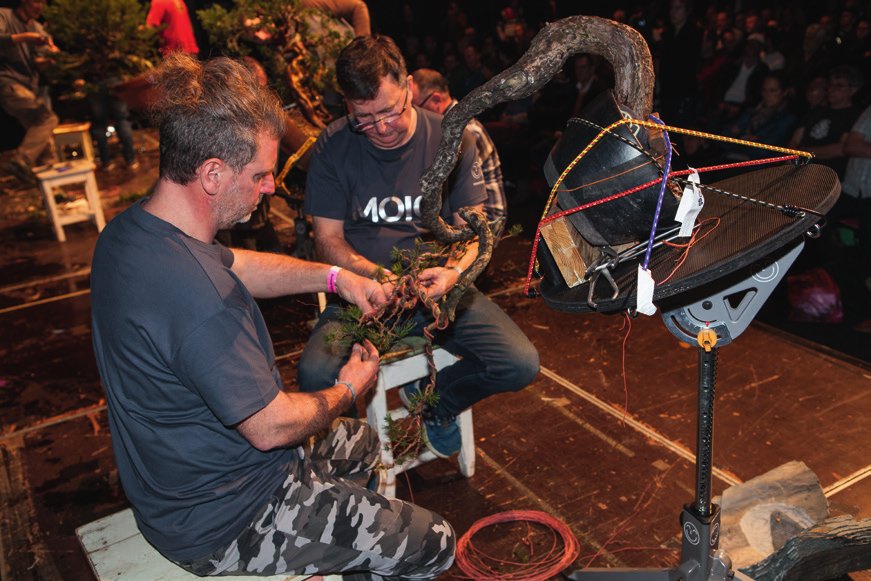
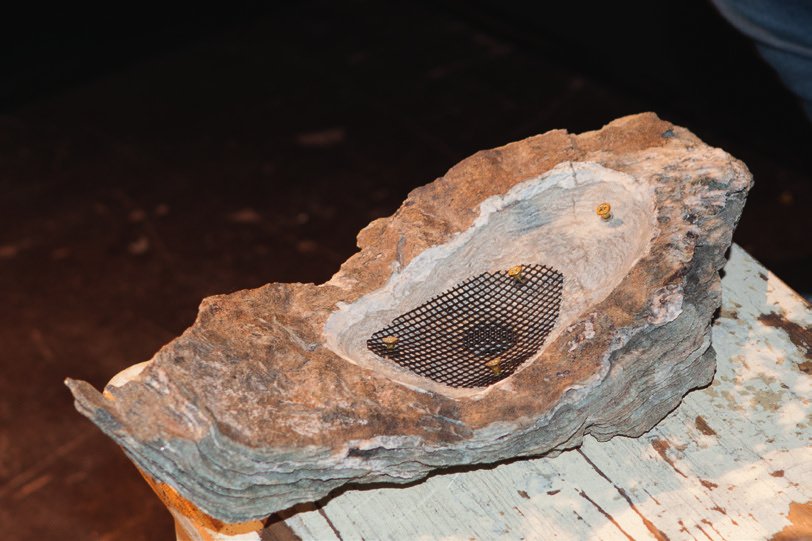
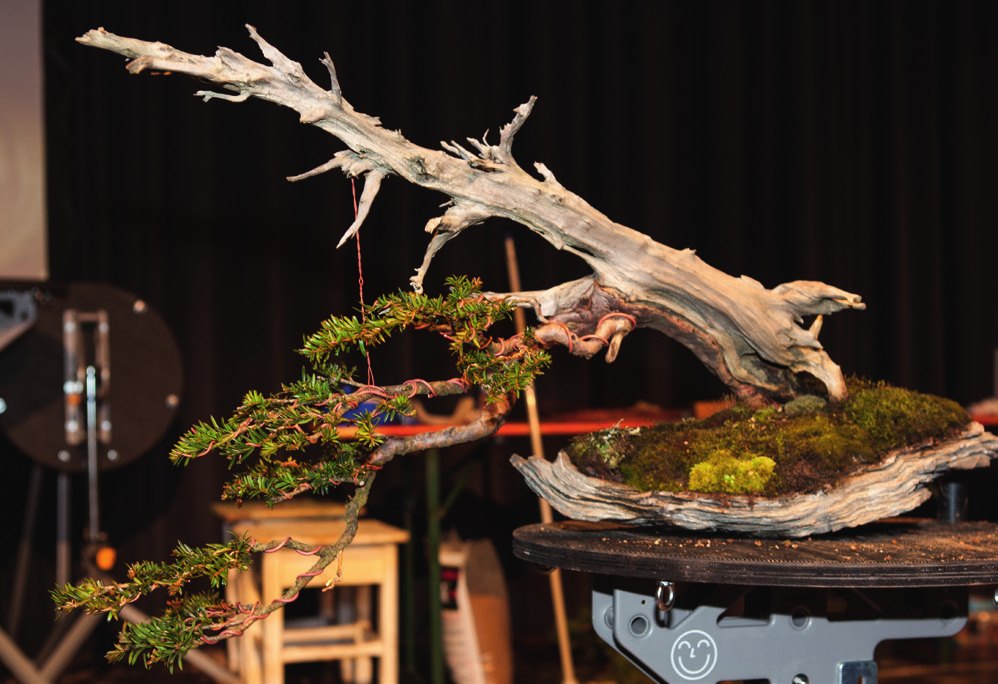
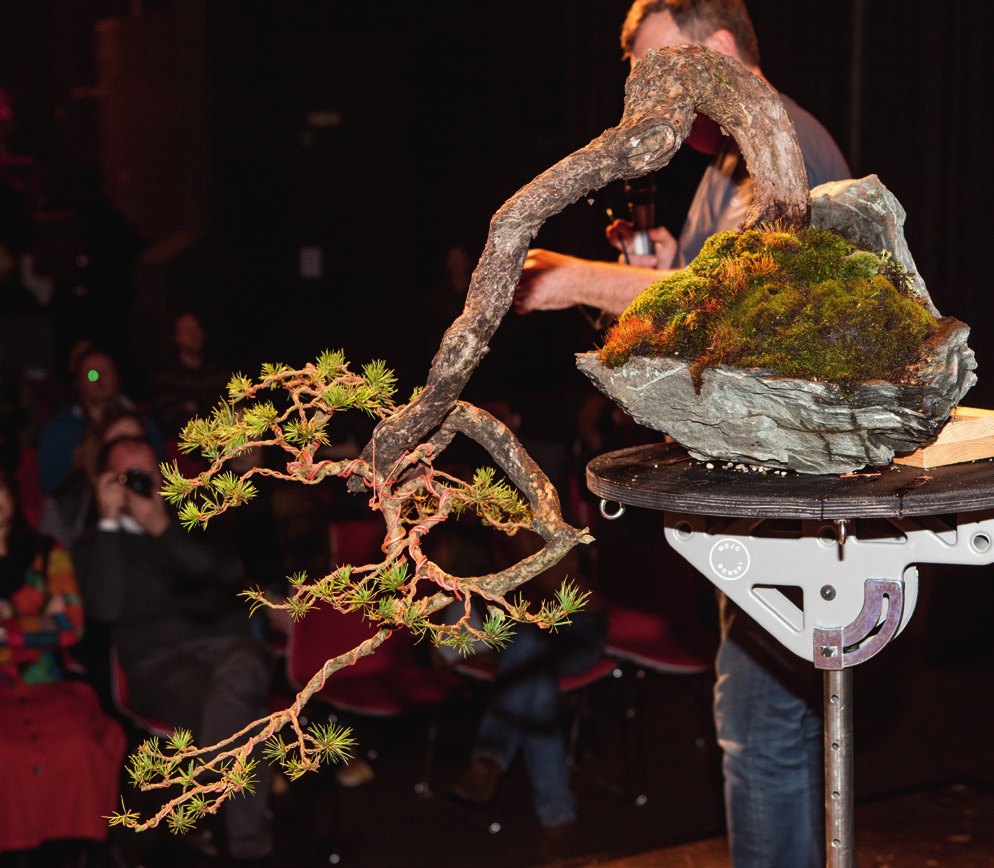
The surprise: when repotting, Tony uses a beautiful lava rock from Scotland. The “pot” has been prepared in advance; holes were already drilled. Usual soil mixture was used for repotting; the tree was well secured. A finishing layer of keto is applied to keep everything in place since it’s not a traditional pot, with moss on top as the final touch.
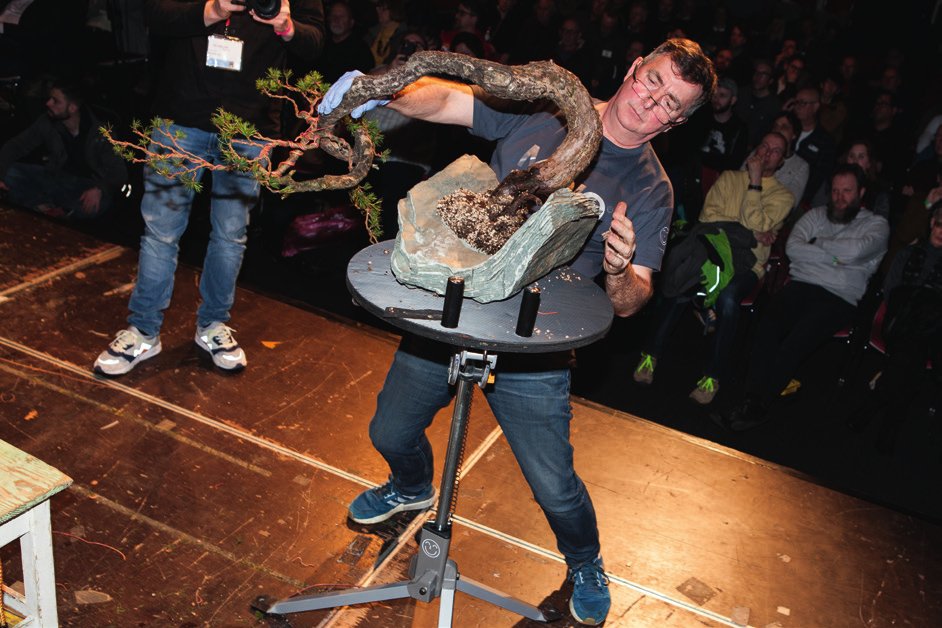
Now comes another surprise; a steel skeleton with two pins covered with back fabric. The rock rests on the two nearly invisible pins and creates a floating bonsai. The idea is to give the impression of a bonsai floating in the air—a special effect, not traditional.
Sunday afternoon
Mauro Stemberger worked on a Juniperus chinensis “Itogawa”
This tree is a yamadori from Japan, which Mauro bought years ago. The original foliage was quite rough. Mauro cultivated more than 100 young Itogawa cuttings and grafted them on this tree 5 years ago to get better foliage.
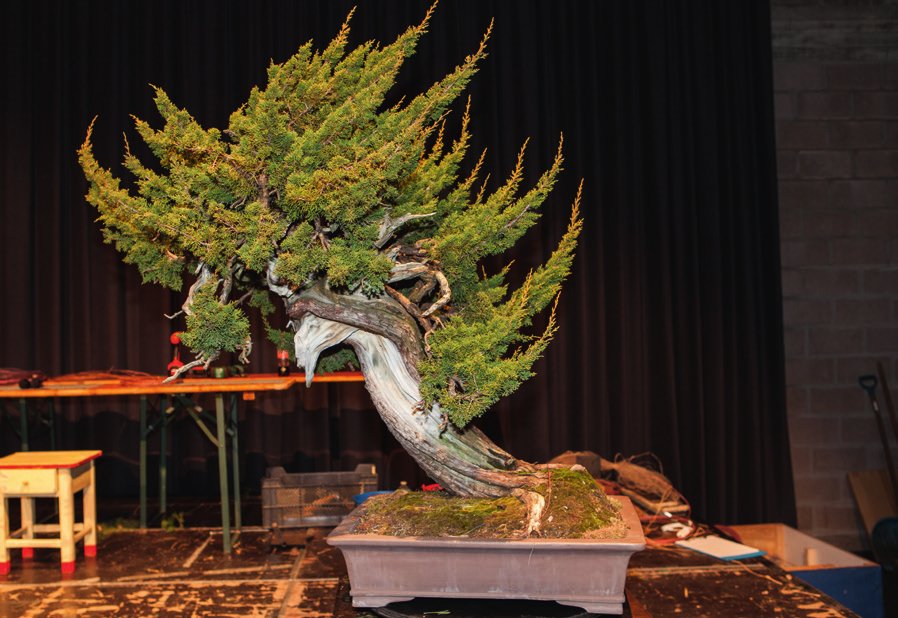
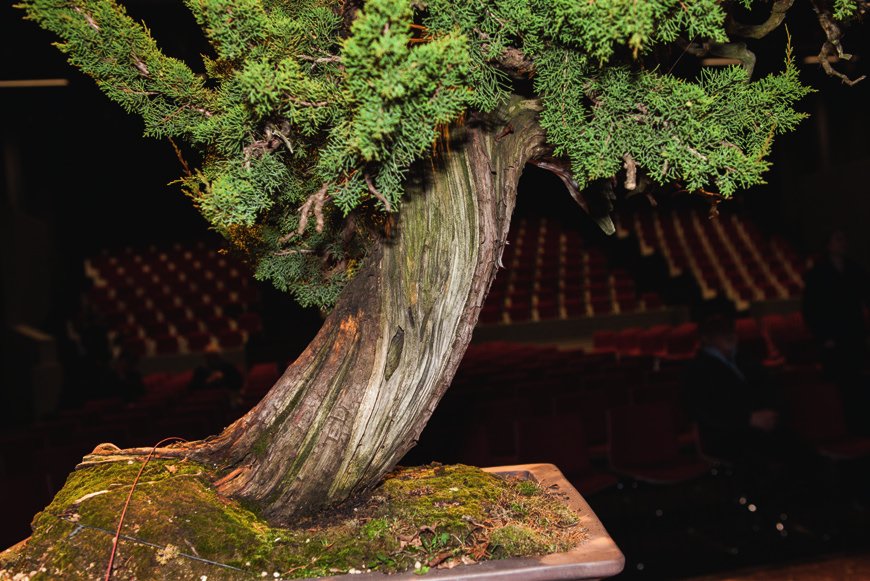
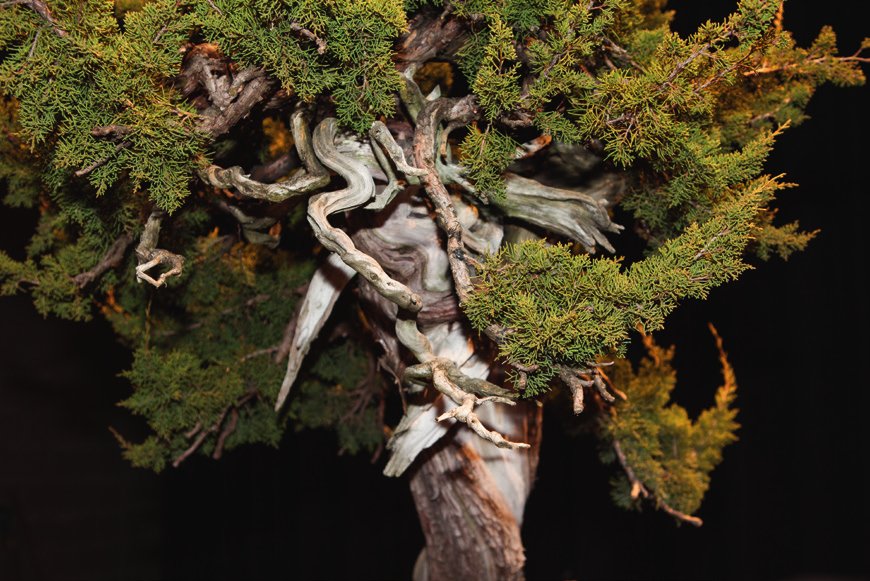
Afterward, all the original foliage was removed. The grafting was a success, and no wounds are left. The trunk originally had a shari, a wide living line, and a Jin with beautiful movement.
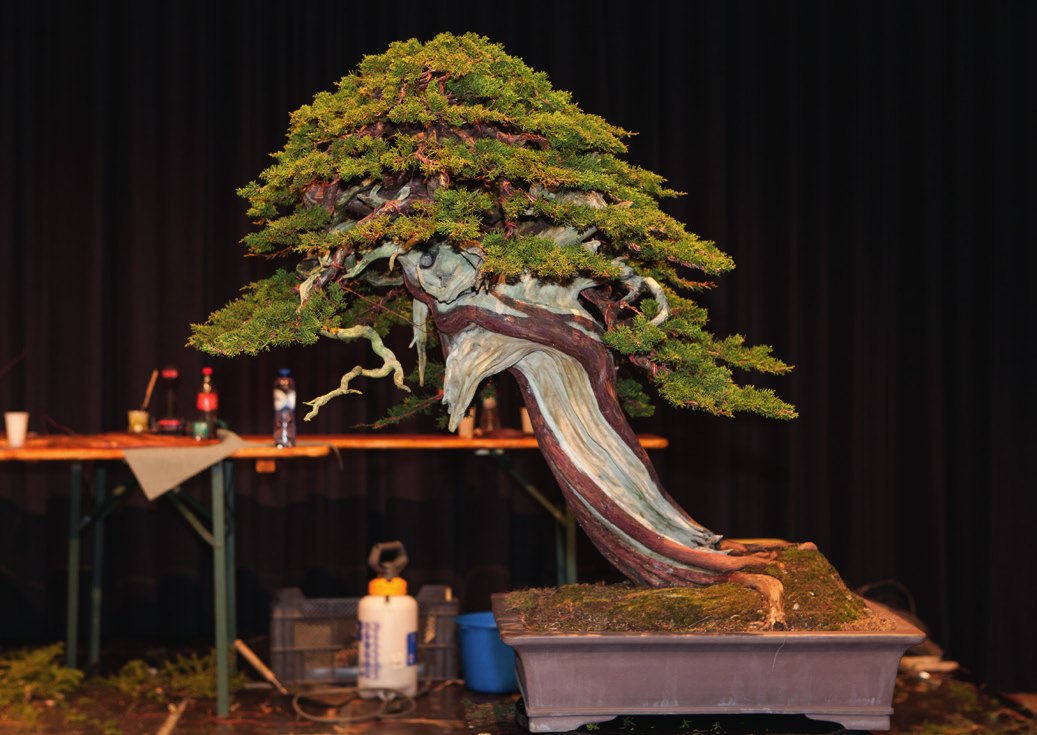
The three assistants start to clean the deadwood, reducing the foliage, and then apply wire: this takes 3 hours. Now the assistants disappear, and Mauro himself finalizes the positioning of the branches, shortening some twigs, checking and correcting each detail. A new bonsai is born.
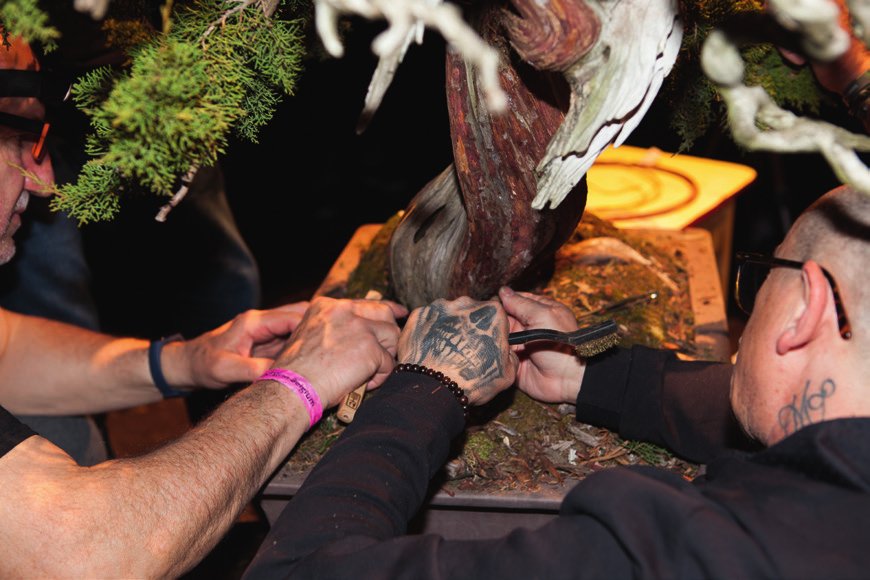
Of course, it will require some final cleaning of the deadwood, repotting in a dedicated pot. As always, a bonsai is never finished.
Minoru Akiyama worked on a Picea glehnii
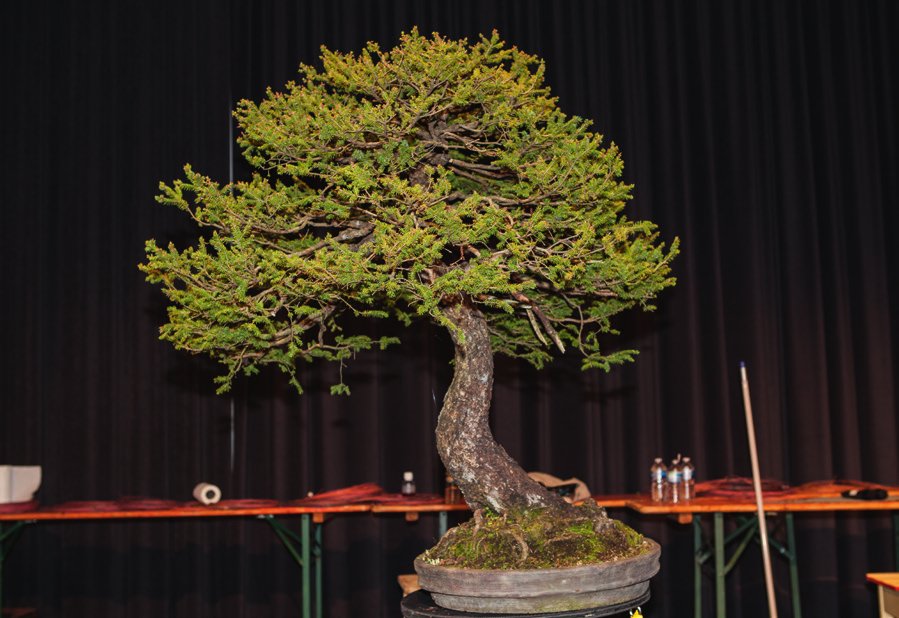
The demo tree is an old Sakhalin spruce, a yamadori from the northern part of Japan. This bonsai had been styled different times already, then left unattended and lost his beauty. Too many branches have grown at the upper part and make the top looking too heavy, but Minoru likes the tree.
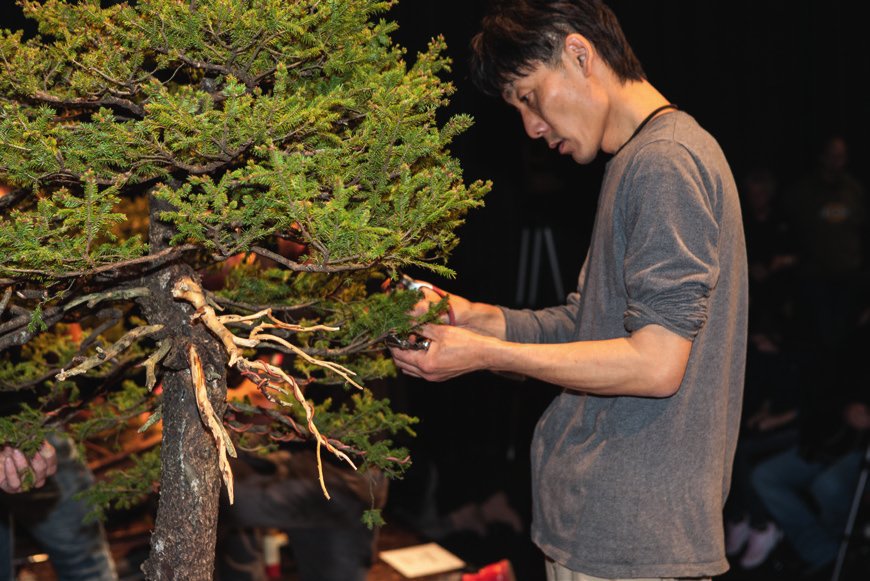
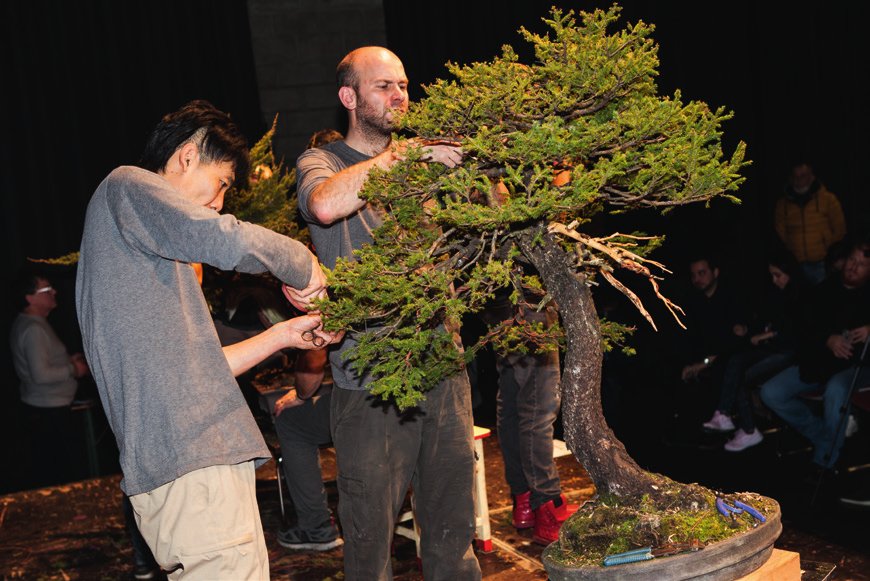
As usual, Minoru looks for the best front and the right inclination. The longer branch on the left side will be the Sashi-Eda. On the right side, there are too many branches. A cluster of twigs and dead branches are at the upper part of the tree.
At this point, Minoru turns the tree 180 degrees. The first front chosen becomes the backside. Most probably, Minoru had this already in his mind from the beginning.
What was the right side is cleaned, twigs are shortened, other branches become jins.
With much care, Minoru selects the branches and twigs to shorten or to be cut, making the bonsai look much more elegant, lighter. The reason to carefully select the branches and twigs to be reduced is that compared to Taxus, it is not so easy for Picea, to get new growth on older branches.
Also, the wiring is done with great care, and each branch is placed in the correct position. After the wiring, only little has to be corrected. Picea is very sensitive to dry air and the heat of the spotlights. Minoru sprays some water over the bonsai to humidify the whole foliage.
Minoru achieved excellent results and a beautiful, elegant bonsai.
Ryan Neil’s subject was a mugo pine
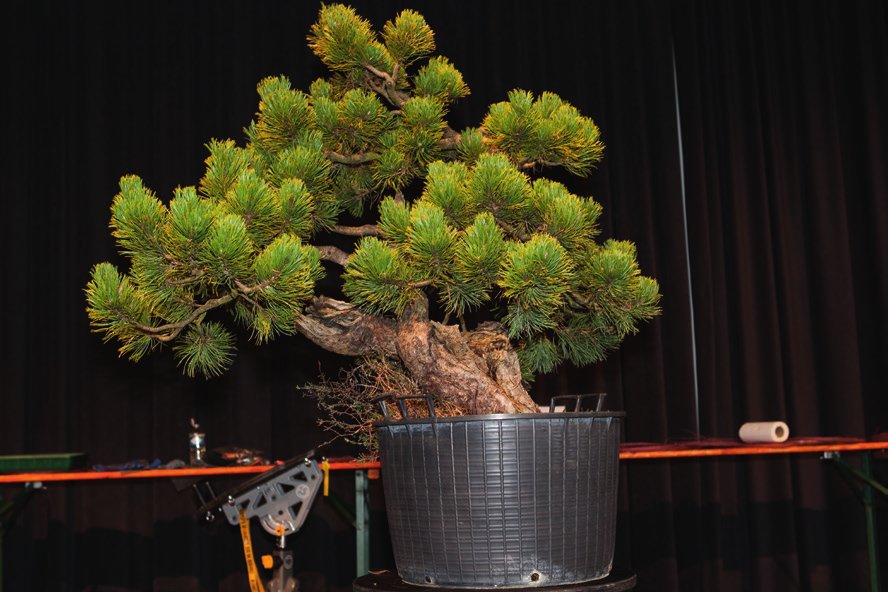
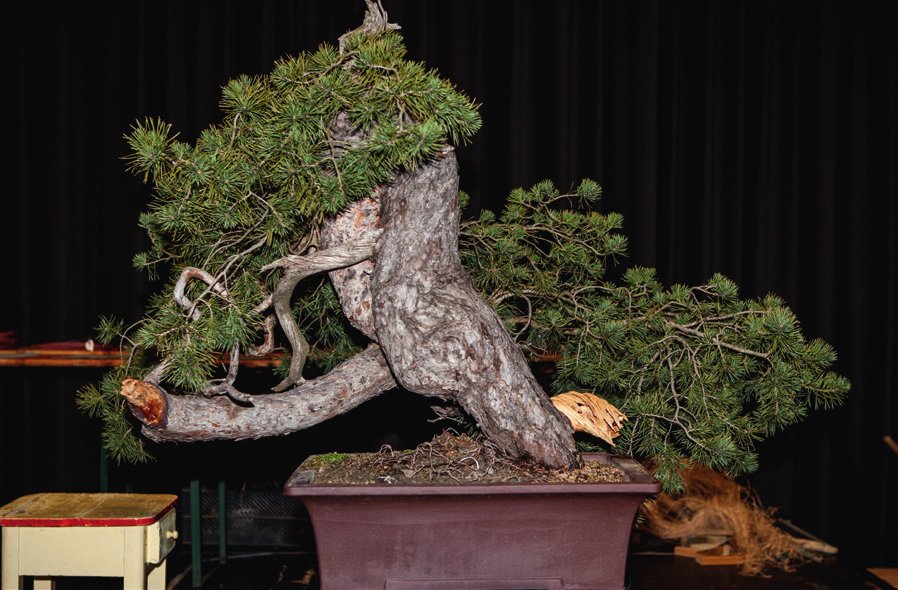
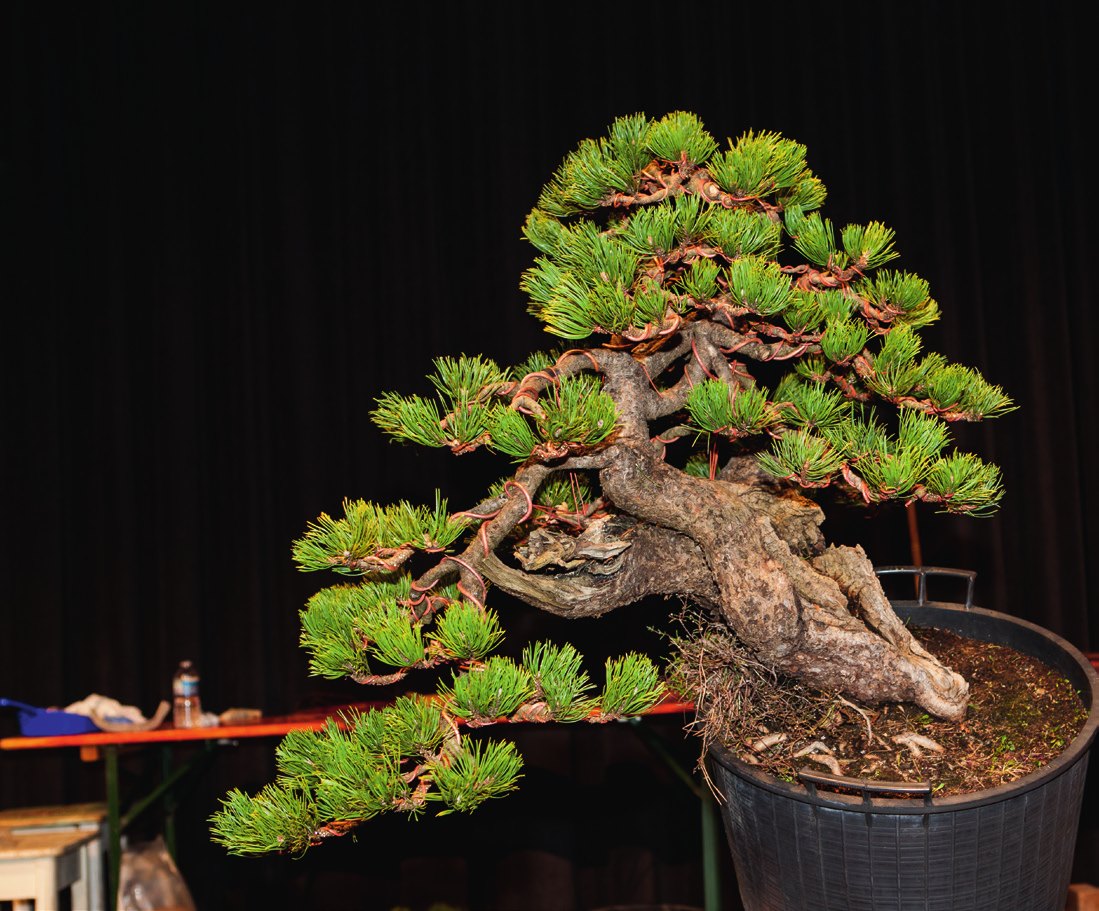
This tree has a story: Ryan did the first styling five years ago at a previous Trophy. It’s an old heavy Yamadori, dug out of the Alps in Italy. At the first styling, the long trunk was shortened and bent by hollowing the trunk. The main branches were brought down. The tree was left for five years to grow and to get more twigs, but nothing was done to reduce the length of the needles. The result is a quite compact and healthy tree. Time for a second styling. Ryan wants to bend the trunk a little more and to bend the thick branches downward. Again an iron bar has to be fixed to fasten the necessary guy wires. It takes some time to bend the thick branches without damage. The assistants remove a part of the needles while Ryan trims branches that are too long.
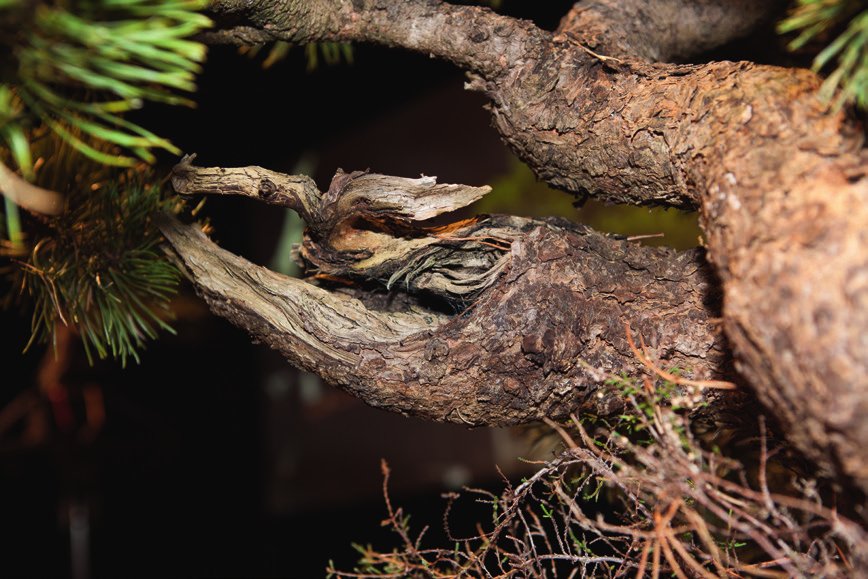
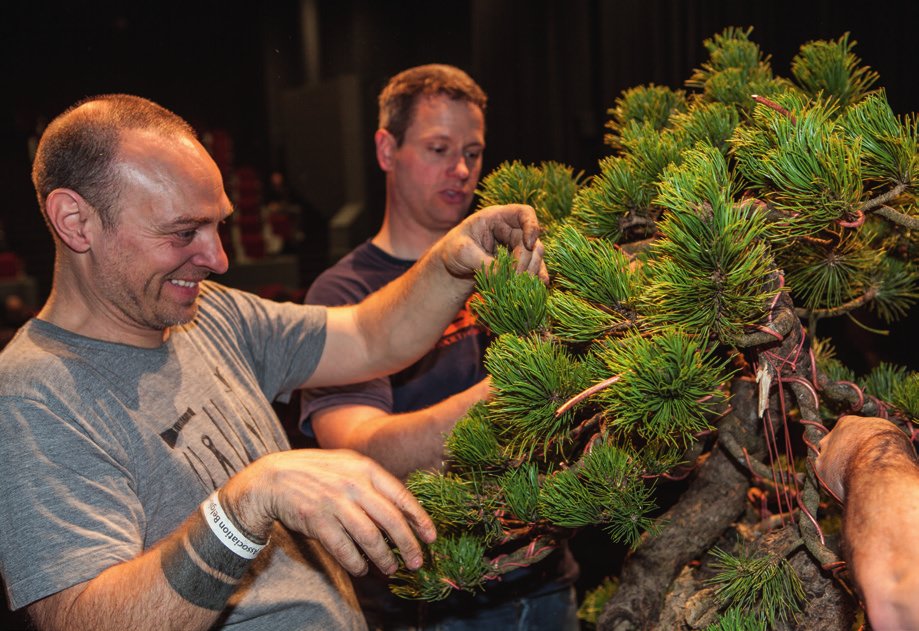
Now follows the classical wiring, with copper wire. Branches and twigs are set in a way to place focus on the trunk. The bonsai is inclined to the front to create more depth. The future: First: repotting into a bonsai pot must probably be done in two steps depending on the rootball. Probably a rectangular unglazed pot will be the best. Secondly: refining the deadwood. The existing deadwood must remain untouched. Let Mother Nature and time make it better. It is the artist’s task to finish the new deadwood at the base to look like the existing dead part. Only aging makes the new deadwood match the old one. Finally: Refine the position of the branches and new twigs and cultivate it in a way to get shorter needles. This demo was a “next step,” but the result will be a masterpiece.
Tony Tickle worked on Taxus baccata that was dug out somewhere in the UK and has previously been worked. There is only one long side branch with only a few twigs. There are also a few Jin, and the tree lays completely horizontal. The first idea, maybe Fukinagashi, but not at all, Tony wants to make a han kengai. The only branch is flat, everything is quite compact, nearly a pancake. Creating a three-dimensional design is the goal. First, Tony puts the tree in another position, more downward; this makes a Cascade design possible. Some movement is given by wiring the living part. The end of the branch is brought back upwards. Finally, all the secondary branches and twigs are wired and set in the correct position to create more volume. As on Saturday, Tony used a lava stone (volcanic) from Scotland as a pot. Holes were already drilled before.
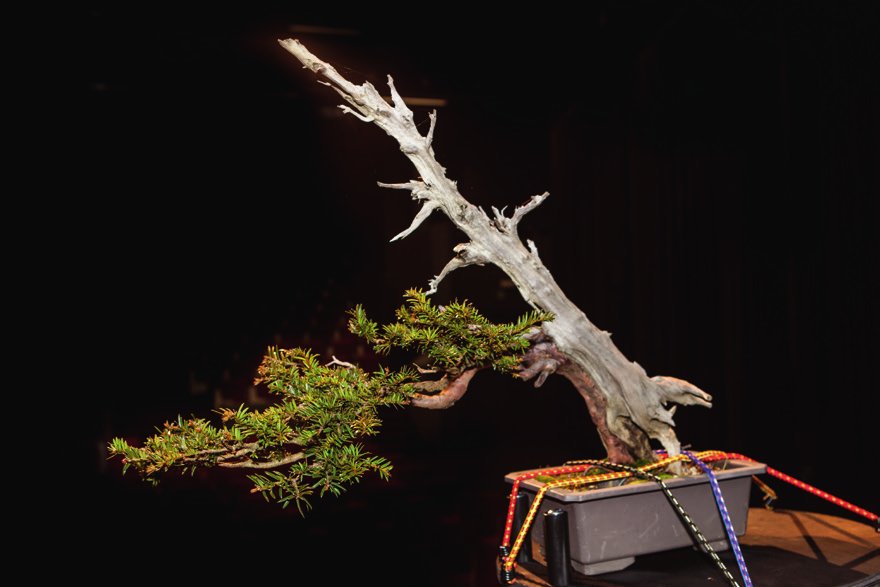
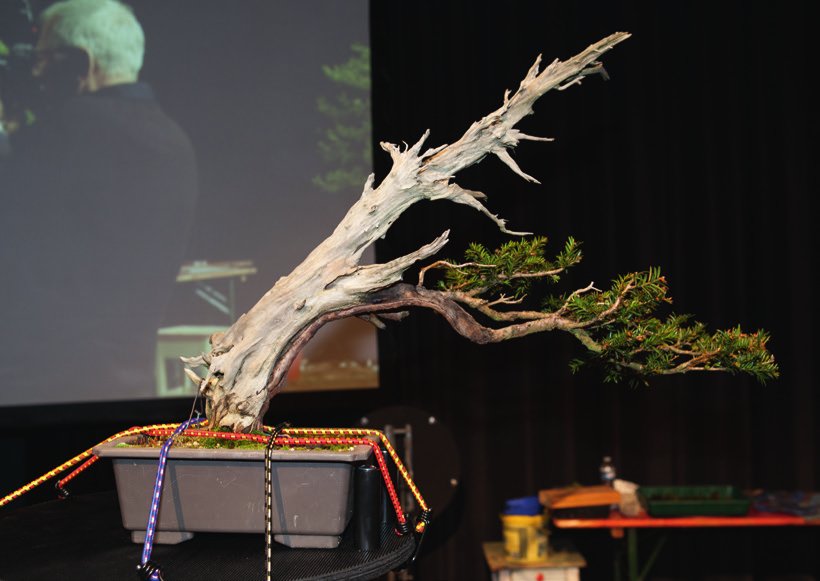
The repotting, finalizing with Keto to keep the soil in place and applying moss as finishing touch, takes only 15 minutes. The bonsai and stone are well balanced. Future: Let it grow, to get more volume, wiring new twigs and trimming.